Reactions to DOJ Updates at PCF 2024

Empty conference room

It’s hard to believe that the PCF Congress was more than a week ago. But no sooner had we returned home and unpacked than we joined our clients in the annual sprint to get as much done before the holidays arrive and put the brakes on all our ambitions for 2024. So, before our Congress memories get swept away in the whirlwind, here are some things we took away from this year’s PCF.

The DOJ and AI. First and foremost, almost everyone was talking about the revised DOJ guidelines that came out in September. In the most recent version of its Evaluation of Corporate Compliance Programs (ECCP), the DOJ has made it clear that it expects companies to proactively manage the compliance risks of new technologies, especially AI. From what we heard at the conference, it doesn’t seem like many compliance professionals needed any prodding, as AI was discussed in multiple sessions, both as a source of new risks and as a tool that can increase the effectiveness of a compliance program. For example, one organization described how they have deployed an AI chatbot that employees can use to get answers to compliance-related questions.

Got Data? Along the same lines, AI can help compliance programs align with the revised ECCP’s emphasis on using data to identify and manage risks. “Is the company appropriately leveraging data analytics tools to create efficiencies in compliance operations and measure the effectiveness of components of compliance programs?” Here again, we heard from many compliance leaders who have already embraced data analytics as a way to mitigate such risks as HCP spending and third-party management. (Maybe because they jumped on board back when “big data” was the hot topic and AI was content to linger back in the IT department.)

A Culture of Compliance. The DOJ also expanded its guidance on whistleblower protections and the importance of anti-retaliation policies and practices. In the sessions we attended, this update was discussed in terms of creating a culture of compliance where employees feel safe to speak up. In one session on culture, there was also a discussion of the importance of speaking to your employees in their language, not the language of compliance. For example, when reminding sales employees that sign-in sheets are important for HCP meals, it might be good to mention they’re also a good way to capture new leads.

Tailored Training. One ECCP update that has not grabbed as many headlines is the DOJ’s insertion of this question in the section on Training and Communications, “Are the company’s training and communications tailored to the particular needs, interests, and values of relevant employees?” Once again, the compliance professionals we talked to at the Congress needed no convincing that targeted training is more effective than a one-size-fits-all approach. In this regard, the Congress had several engaging sessions that looked beyond commercial teams to discuss the unique compliance training needs of medical, clinical, and research personnel.

A Common Goal. Our last takeaway from PCF 2024 is that, although many of them work for competitors, there was a genuine sense of community among the attendees who encouraged and supported each other throughout the Congress. The life sciences compliance community is made up of an amazing group of diverse individuals who passionately share one goal: helping others do the right thing so patients can get the treatments they need.

And we at NXLevel Compliance are proud and excited to help them achieve this goal. We can’t wait for next year’s Congress.

PCF 2024 Preview

Washington DC skyline at night

In case you haven’t noticed, this year’s Pharmaceutical and Medical Device Ethics and Compliance Congress is right around the corner (October 28-30, in Washington, DC)! And for 25 years now, the congress has always presented the same challenge: so many great sessions and so little time.

The plenary sessions are easy since we’re all gathered together in the same room. Once again, we’ll be listening hard to updates from OIG and FDA representatives, and taking detailed notes during the other plenary discussions, too. We’re particularly looking forward to “The Implications of AI for Lifesciences Ethics and Compliance Programs” on Day 1.

But deciding which mini summits to attend during the rest of the congress is a bit trickier. While they all will provide valuable insights, we’ve narrowed down our list to a manageable, “Magnificent 7” that we will be sure not to miss (queue theme music).

Day 1

8:00-8:50 Mini Summit 1: Federal Criminal and Civil Enforcement: Recent Highlights and Emerging Issues –  A former US Attorney and former DOJ Deputy Assistant Attorney General will discuss recent DOJ actions impacting the pharma and med device industries, along with emerging issues.

9:00-9:50 Mini Summit 8: Update on Medical Device Regulatory and Enforcement Actions – A great follow-on from the previous session, this panel discussion takes aim squarely at the medical device industry and its evolving landscape of regulations and recent enforcement actions.

10:00-10:50 Mini Summit 13: Hot Topics and Compliance Oversight in the Research and Development Area – This session looks to shed more light on an area that may not always receive the compliance attention that it deserves.

11:00-11:50 Mini Summit 18: Compliance Training on the Digital Frontier – OK. Guilty. It’s a session moderated by NXLevel Compliance Sr. VP Dan O’Connor.  But it’s also a place to hear from your colleagues and how they’ve delivered effective compliance training to “digital natives” and “digital immigrants” alike, using approaches and tools that are readily available in your company.

Day 2

9:00-9:50 Mini Summit 35: Privacy Top-Ten: Strategies and Tactics to Address Operational Impacts of the Evolving Privacy Landscape – Yet another session looking to address a crucial compliance topic in motion (this time, privacy).

10:00-10:50 Mini Summit 44: Evolving Risks in Medical Affairs – As many companies ask more of their Medical Affairs teams, the risks that those teams are exposed to have grown. This session will discuss how you can stay ahead of those risks.

11:00-11:50 Mini Summit 51: Negotiating DOJ expectations and business challenges while creating a “Culture of Compliance” – The title says it all. In fact, it may be a good job description for a compliance officer.

That’s our Magnificent 7, but you couldn’t go wrong attending any session at this congress.

And if you go, feel free to visit our shiny new booth in the Exhibit Hall. We will have examples of our latest compliance training solutions to share and are eager to catch up with old friends and make new ones.

See you in DC!

Back to School Isn’t Just for Kids

Photo of two small children walking to school

It must be August. There’s a ton of back-to-school ads on TV and my mailbox is stuffed with fliers for new backpacks. And while most of your employees are too big to sit behind those tiny student desks anymore, it might not be a bad idea this fall to send them “back to school” too.

Like the OIG says in their latest guidelines, “Education should not be limited to annual formal training requirements. The compliance officer should seek and develop opportunities to provide education on compliance topics and risks throughout the year.”

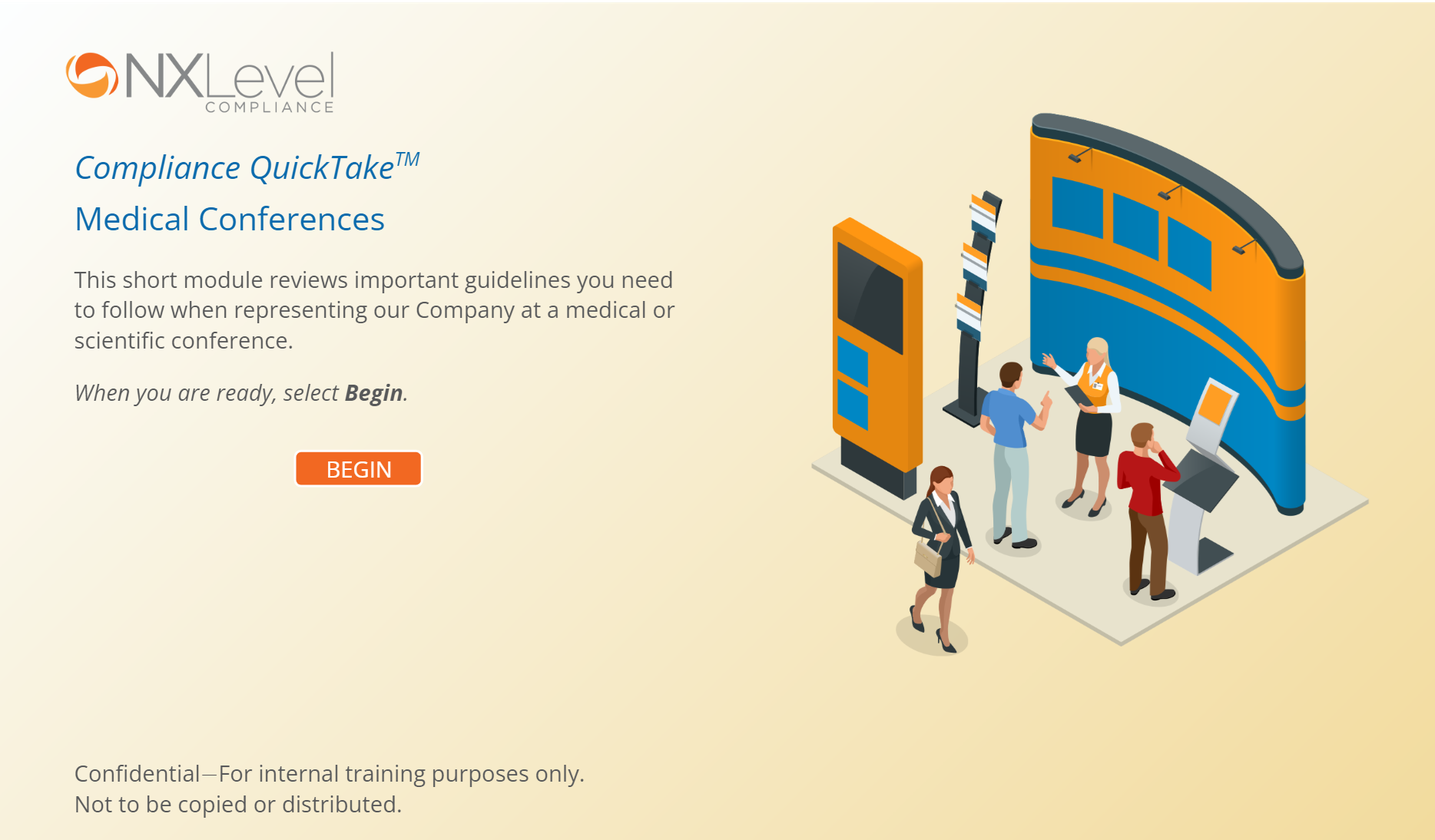
Image of NXLevel Compliance Quick Take on Medical Conferences

This doesn’t mean you need to weigh your employees down with a heavy fall course load, especially since the workplace tends to speed up once everyone is back from vacation. Instead, you could deploy short eLearning modules that just focus on one or two particular risks.

You could also use brief videos, that take a lighter, but still serious approach to reinforcing important compliance principles. Even simple email communications can be designed to grab your employees’ attention and remind them about key points.

Image from short video on HCP meals

We all know the adult attention span  isn’t what it used to be, and your training objectives are busy competing with the demands of an ever-evolving workplace. Sometimes shorter is better.

Studies have shown that shorter learning events spaced over time can be more effective than a single large learning event. There is also less strain on your resources to produce shorter training deliverables – less content to write, review, and develop into its final form.

And with that in mind, we’ll keep this post short too, and just remind you that NXLevel Compliance is here to help. Not only do we develop short custom modules and videos from scratch, we also have a suite of Compliance QuickTakes, microlearning eModules that reinforce compliant behavior and guidance for high-risk activities. To learn more, contact us at compliance@nxlevelsolutions.com.

Enjoy the rest of your summer!

It Starts With the Code

Anyone who’s paid attention to DOJ or OIG guidance the last few years knows that both agencies are looking for more than just policies and procedures when evaluating the effectiveness of a company’s compliance program. Both want to see evidence of a culture of ethics and compliance — one that encourages and rewards employees for doing the right thing.

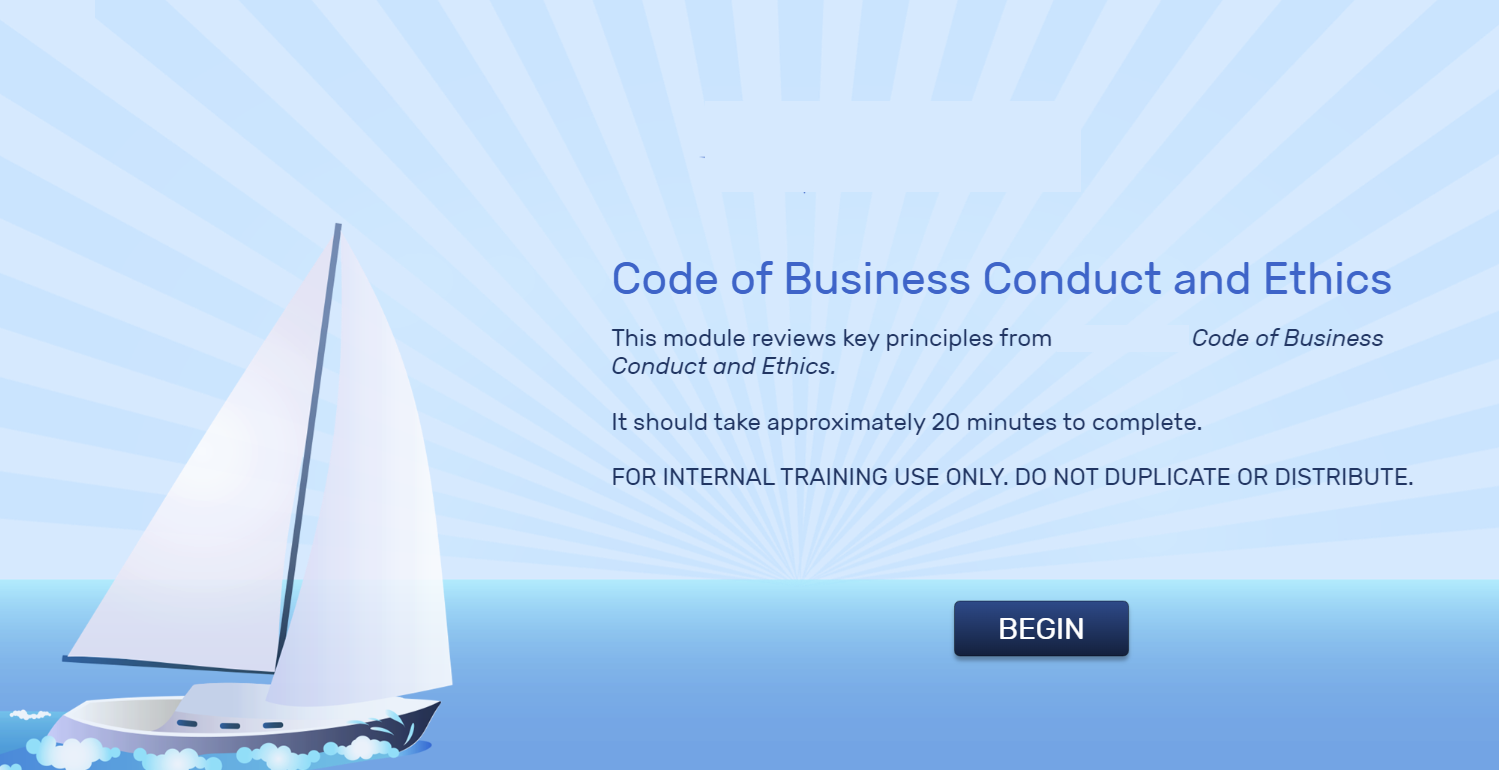
Image of Code of Conduct module title screen

A foundational part of that culture is a company’s code of conduct. It is a declaration of a company’s values and expectations for all of its employees.

How well a company trains its employees on its code directly impacts how far those employees will go in embracing and acting on its values.

A company’s code of conduct training should be the jewel in the crown of its compliance training program, not just because of the size of its audience, but because of the importance of its objectives.

So, how do you create effective code training?

Make it engaging.

First and foremost, do not let your code training devolve into an exercise where you are reading the code to your employees. Require your employees to read the code on their own and use the code training to bring your code to life.

Keep the tone conversational and positive. Remember that people want to do the right thing and work for a company they can be proud of. Speak to the positive outcomes everyone wants to achieve – specifically how doing the right thing ultimately benefits patients.

Example of a scenario question in a code training module

Consider using leading questions, where an employee needs to first consider their own opinion about a topic before covering how that topic is addressed in your code. This helps prime their attention for the information that follows.

Make it contextual.

Help employees understand how the code is applicable to their jobs. Include exercises that ask them to apply its principles to real life situations. However, while these situations should be realistic, they should also be broad enough so that they are accessible to everyone. This is easier to achieve when you remember to emphasize the principles over the details.

Try to anticipate questions employees may have and address them head on. Provide concrete examples whenever possible, again avoiding details that only a narrow audience would appreciate.

Make it continuous.

Do not ask your employees to take the exact same code training year after year. For example, you can create a foundational training that covers your entire code and have all employees complete that training the first year. This training could be between 20-30 minutes in length.

Title screen from a Code of Conduct refresher training module

Then, in subsequent years, you can have employees take shorter (5-10 min) refresher training modules that remind them of key principles. Or you can modify your foundational training each year to focus on different aspects of the code or include different situations and examples.

The important thing is to keep it fresh. Asking your employees to repeat the same code training every year sends the wrong message – that it is not a priority for them or your company.

You can also help keep the spirit of your code alive throughout the year by deploying short videos, micro modules, and intranet banners that reinforce key points, like speaking up, avoiding conflicts of interest, or protecting confidential information.

Consider how the code is published.

Finally, you may even want to consider how the code itself is published. Instead of an expensive, glossy booklet that gets thrown in a drawer or a bland, static PDF that requires a lot of scrolling, your code can be published as an interactive, visually appealing, engaging online experience (a microsite) that can even include exercises that turn the code itself into a learning tool.

There are many strategies you can adopt to help bring your code to life and nurture the culture of ethics and compliance that the DOJ and OIG are consistently pointing to. Whichever strategy you think may work for your company, NXLevel is here to help. To learn more, contact us at compliance@nxlevelsolutions.com.

Thanks for reading.

Key Takeaways from PCC 2024

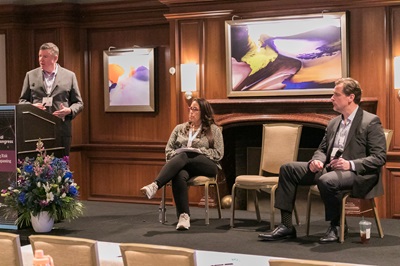
Dan O’Connor, NXLevel Compliance SVP, leading a panel discussion on “Compliance Training on the Digital Frontier”

The NXLevel Compliance team is back from this year’s Pharmaceutical Compliance Congress, where, as predicted, AI was a popular topic and discussions with industry experts reminded us why Compliance should continue having a seat at the table. Here are some reminders and key takeaways from PCC 2024!

AI has landed. While no two companies are embracing and implementing AI in the same way, there is no question that AI is transforming work as we know it and compliance teams are rushing to keep up. Just as we’ve seen with other game-changing technologies, companies are progressively opening the door to greater AI use, which means their policies and training must evolve at the same pace. With AI’s wide-ranging impact, it’s important not to rely on a single training event and instead employ multiple learning channels (such as eLearning, microlearning, videos, job aids, etc.) to instill and reinforce a culture of responsible and compliant AI use.

Compliance applies to everyone. Whether you are a large-scale global company marketing approved products or a smaller scale company with products pending approval, compliance should be at the forefront of your organization. And you need to ensure that your compliance training program meets the needs of your whole organization. While commercial field teams certainly engage in high-risk activities, don’t neglect other members of the organization who may not be as aware of the compliance risks they face.

Social media is still a trending topic. Like AI, the use of social media is constantly evolving. Is your policy up to date? Have you trained your employees on this policy? Your employees need to know the proper ways they may engage with your company’s social media content and the guidelines they must follow regarding their personal use of social media. What can they like, share, or comment on? As we commented on in an earlier post, social media training needs to be rich with examples and help employees understand how their social media behavior can add to their company’s compliance risk.

Keep your training on target. As you may know, the OIG’s General Compliance Program Guidance explicitly states that compliance officers should develop annual training plans that include the training topics to be delivered and the target audience for each topic. While certain training must be delivered company-wide, your training does not always have to be “one size fits all.” When possible, tailor your training to the individual receiving it. And remember, employees are looking for shorter, impactful, and relevant training.

Stay aligned with new and emerging enforcement trends and risk areas. Is your training keeping up with the current compliance landscape? Here are some topics we consistently heard about at PCC:

  • Off-label promotion: Pay attention to social media and other digital content that may not undergo a formal review and approval process.
  • Clinical trial transparency and oversight: Ensure your clinical trial communications contain substantiated claims and truthful, accurate data.
  • Kickback and inducements: Be aware of the implications regarding charitable copays and charitable activities involving patient access programs (PAPs).
  • Data privacy and cybersecurity: Keep patient health data and sensitive information protected.
  • Market access and patient support programs: Monitor your programs to ensure they are operating as intended.

2025 will be here before you know it. Those are just some insights we gathered from this years’ PCC, and we are already looking forward to next year’s event. If you missed us in the exhibit hall and are interested in learning how we can help you reduce your compliance risk, contact us at compliance@nxlevelsolutions.com.

Thanks for reading! See you at the next conference!

PCC 2024 Preview

We always look forward to the Pharmaceutical Compliance Congress, but never more so than this year with AI becoming such a transformative force in the life sciences industry and beyond. This year’s congress, occurring April 16-18, is being held at a pivotal moment for compliance professionals. And once again, there are hard choices to make, as there are more intriguing sessions than one person can possibly attend. To help you decide which ones to drop in on, here are five sessions that stood out to us when reviewing the agenda.

The NXLevel Compliance booth at PCC
The NXLevel Compliance PCC booth.

Day 1: Top Areas of Concern for the Compliance Professional – There are few details for this particular session available right now, but based on the title, the senior compliance professionals on the panel, and it’s prime slot position on Day One, we are eager to find our seats.

Day 1: Enforcement Panel – Critical, Industry-Specific Updates from the Most Active Office’s for the Bio/Pharma and MedTech Industry – This is a unique opportunity to hear about enforcement trends and new risk areas straight from DOJ officials. (And you may want to follow up with the afternoon session on New and Emerging Risk Areas for 2024 and Beyond.)

Day 2: Industry Pioneer Panel – A Look at the Rapid Adoption of AI Across the Life Sciences Sector – This session promises to provide insights on how compliance professionals can help their organizations responsibly adopt AI and mitigate the risks involved. (Once again, there is a complimentary afternoon session on Artificial Intelligence in Life Sciences Compliance.)

Day 3: Industry Case Study: Compliance Training Strategy and Implementation –This is a can’t-miss session for compliance training professionals. Three members of Regeneron’s compliance team will share their experience implementing and executing an effective training strategy. Expect plenty of practical insights.

Day 3: FDA Address –  The conference ends on a high note with a session with Catherine Gray, PharmD, Acting Director, Office of Prescription Drug Promotion, U.S. Food and Drug Administration (FDA). Hear the OPDP’s top priorities from the Director herself, as well as her thoughts on enforcement trends and warning letters.

Special Mention

Day 1: Compliance Training on the Digital Frontier—Okay, we’re biased. NXLevel Compliance Senior VP Dan O’Connor and his panel have put together a session that explores how you can use existing tools and emerging technologies to create a compliance training program that reduces risk while meeting the expectations of all of your employees, no matter where they are on the “digital fluency” spectrum.

These are just some of the exciting programs planned for PCC, and we look forward to seeing many of you there. If we don’t run into you at a session, please stop by and visit us at the NXLevel Compliance booth, where we will be sharing examples of the different kinds of compliance training solutions we can create to help you meet this unique moment in the life sciences industry.

See you in Virginia!

And the Oscar for Best Compliance Training Video Goes to …

If we pulled together the compliance training budgets of all the biopharma and med device companies in the world, we might have enough money to pay for producing the first 90 seconds of Oppenheimer, winner of this year’s Best Picture Oscar.

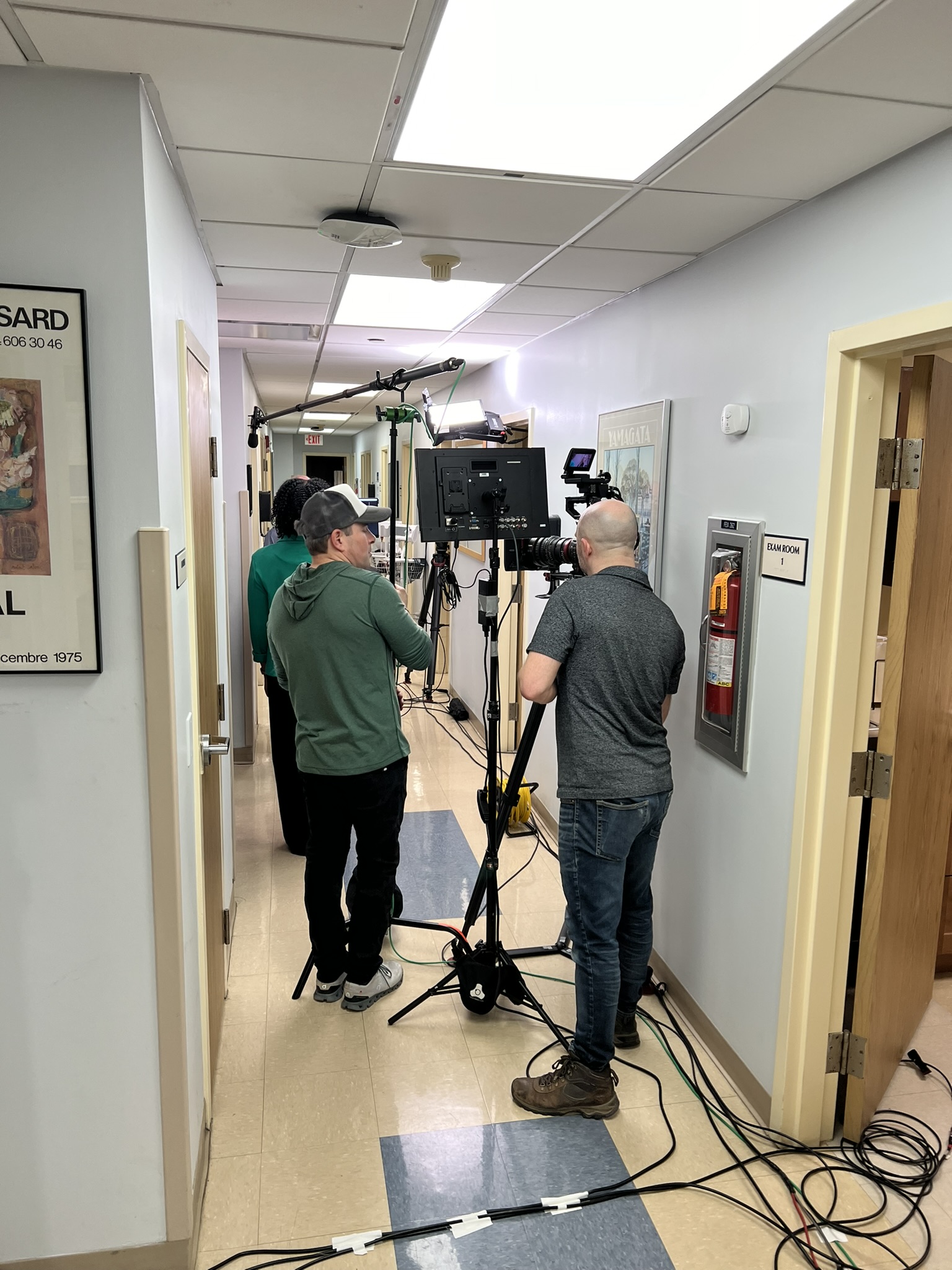
Video crew set up for an interior shot at a doctor's office

But it may not be as expensive as you think  to create a live-action video with an effective and compelling narrative that brings real-world compliance risks to life. With the right planning, you may be able to afford a professional-quality video that makes a significant impact on your learners.

To be clear, we are not talking about a low-budget, DIY solution, like shooting a video on a smartphone. That type of approach can be perfect for a short how-to video, an employee interview, or a simple communication. But to capture a story that has emotional impact and conveys the depth and complexity of a situation often requires a bit more skill and technology.

So how can you create a powerful, story-driven video without breaking the bank? Here are some tips.

Keep it short. Time is money so longer videos cost more than shorter ones. Consider that most scenes in a Hollywood movie only last between 2-3 minutes. That means a 15-minute video can easily contain 5 scenes – more than enough to develop one or two rich story lines or several simpler ones.

Don’t use too many locations. It takes time for a production crew to set up and break down at each location. Cameras, lights, microphones, teleprompters, and other equipment all need to be set up properly for a shoot to go smoothly and produce quality footage. Plus, there’s travel time between locations. Once again, time equals money. The script writer should consider how you can get multiple uses out of just one or two locations.

Video crew filming an outdoor scene in an SUV

Consider using a blend of actors and employees. Professional actors will give a convincing performance that will make your story more authentic, but they cost money (though less than you might think). You can save some of that money by reserving the larger roles for professional actors but using your colleagues for supporting parts (think one or two lines). It’s fun to see coworkers in a video, but just be realistic about what you are asking from employee talent.

Have a strong project manager. There are a lot of moving parts and people to keep track of – script reviews, production staff, actors, locations, props, food planning, weather… you get the idea. A good project manager will not only stay on top of things, they’ll be able to find efficiencies that reduce costs.

Be flexible. Things happen. An actor gets sick. A VP stops by and has a brainstorm. An outdoor scene is washed out by rain. Learn to adapt and work with what you have, within reason of course. Here a strong PM can keep the train on the track.

Get the most bang for your buck. Even with the above strategies, a professional video costs money. So, make sure you get the most out of your investment. Reserve professional videos for use with large audiences and high risk topics. Also consider how you can reuse your video. For example, you might show the full video at a large meeting, then reuse small portions of it within a microlearning module or embedded within a communication. You can also use stills from the video. Done well, your video can become a unique component of your training curriculum that helps set the tone for your company’s culture of compliance.

Have fun. While not a low-cost item, it’s worth remembering that creating a high-quality training video can be a fun, creative, and energizing experience for all the team members involved.

These are some basic suggestions, but obviously every project is unique. With over 30 years of experience creating training videos, NXLevel can help you realize your vision without breaking your budget. And instead of helping you raise an Oscar, we can help you lower your compliance risk.

To learn more, contact us at compliance@nxlevelsolutions.com

Compliance’s Moment at the Next Big Meeting: What to Consider

With the new year now having gained full momentum, many compliance teams are looking ahead to one or more large-scale meetings later this year where they have been granted a precious agenda slot to conduct some form of compliance training. Maybe it’s an hour at a national sales meeting or 30 minutes wedged into a POA. Whatever it is, it’s an opportunity not to be wasted.

If this is the challenge your team is facing, you probably realize that simply presenting compliance guidance using a slide deck is not the answer. Instead, you might be thinking about using a game or some other activity to create a meaningful learning experience that will engage the meeting attendees and help them connect compliance with the situations they encounter on their jobs.

If so, here are some questions to consider when deciding what type of activity to use and how to plan for its success.

What do you want the attendees to take away from your session? Remember, they are likely processing a lot of other information during the meeting, and your time is limited. Trying to cover too much will dilute the impact of whatever activity you choose. For example, focusing on speaker programs, conference attendance, and joint interactions all in one session is likely too much. Always highlight where people can go for more information or if they have questions.

Who are the attendees? Several questions are rolled into this one. How many people will be in attendance? What are their roles and experience relative to the content you want to cover? Are there logical team structures you can leverage during the session? The answers will help you determine how to achieve a high level of engagement for everyone and the amount of technical and facilitation support you may need.

How can you integrate your activity with the rest of the meeting? You don’t want your activity to feel like it’s disconnected from the rest of the meeting (any more than you want employees to feel like compliance is disconnected from their work). Consider how your content, tone, and visuals can be aligned with the larger meeting in which you are taking part.

How much time do you have for your session? More complex activities can take more time. You need to account for setup, instruction, the activity itself, and any feedback or additional insight you want to provide. We recommend a dry run before the meeting to help you recognize just how much you can realistically accomplish in the time you have.

What is the meeting format? Will attendees be in-person, virtual, or a blend of both? For in-person attendees, what will the room layout be? What tool will virtual attendees be using to connect? Many activities can work for either in-person or virtual attendees with the proper design. But that’s not something you want to figure out on the day of the meeting.

What are your technology needs? Understand the technical needs of any activity you are considering and the resources you will have available. For example,if you want to conduct an in-person activity that relies on each person using a Wi-Fi connected device, what’s the capacity of the room’s Wi-Fi? What devices will people have with them? Are there any URLs, settings, etc. that need to be cleared with IT prior to the activity? Is each facilitator comfortable with the technology? Having technical support on standby can reduce any down time, and if a production company is involved, they can potentially help handle some tech needs. Again, a dry run ahead of time can uncover potential issues.

How will you evaluate the results? Conducting a training session at a large meeting presents an opportunity to gain valuable information about the learning needs of your audience and the impact of your training efforts. While games typically provide a score, more sophisticated tools can provide you with analytics that allow you to drill down to individual question and learner results. You may also consider conducting pre- and/or post-activity surveys/assessments and looking for evidence of behavior change (eg, examining changes in help desk calls, reported violations, etc.).

How much time and what resources do you have for development? Having less of either does not necessarily mean you have to settle for less impact. Off-the-shelf solutions can take less time and fewer resources to implement, but still create a high level of engagement. Likewise, when more time and/or resources are available, you can consider custom solutions that speak more uniquely to the specific challenges your employees face.

This is by no means an exhaustive list, but hopefully this has given you food for thought. You can also reach out to us at NXLevel Compliance to leverage our 20 years of experience helping biopharmaceutical and medical device compliance teams make the most of their moments at the next big meeting.

Thanks for reading and feel free to reach out to us at info@nxlevelsolutions.com.

Compliance Training Trends 2023

“What are other people doing?” It’s a question we’ve been asked by almost every client. They know that we work with dozens of life sciences companies each year, many of which have the same compliance risks and face similar training challenges.

And while no two clients, or the solutions we create for them, are exactly alike, we noticed eight common trends this year. So, here’s what “other people” were doing in 2023.

Delivering shorter and sharper training. Across the board, clients turned towards shorter, leaner training solutions. Whether that meant trimming down longer modules or creating a series of shorter modules, clients embraced solutions that minimized learner fatigue and established more realistic learning goals. An important principle to remember is to suit the length of the training to the content. For example, if the complexity of a topic truly requires a 20-minute module, then don’t break the module into two parts just to have shorter modules. Your learners might find this more annoying than simply having a single, longer module to complete. A more meaningful way clients reduced training length was by …

Targeting training by role. Coupled with the goal of shorter training, we were able to create better compliance training solutions for clients because those solutions were targeted to specific roles and/or risk areas. In some cases, this meant designing a series of micro-modules that focused on specific types of interactions with healthcare professionals. For other clients, we included role selectors inside modules, so learners received instruction tailored to their job. This went a long way to …

Making it more engaging. Life sciences employees must navigate a deluge of information and many of them spend a significant amount of time working outside of the office, where distractions increase. Getting and keeping their attention is an ongoing challenge. In 2023, our clients continued to embrace new visual and instructional designs approaches, while employing games, interactive activities, and video to grab learners’ attention and help them make meaningful connections between their jobs and critical compliance principles. And once learners were engaged in the process of learning, our clients focused on …

Keeping it going. All our clients (and the OIG) recognized the need to sustain learning. That’s why they increasingly followed a foundational training experience with reinforcement and refresher activities over the course of the year, including microlearning modules, videos, intranet banners, and emails. They also spaced out training on new topics, which built a regular rhythm of learning and increased retention. A key to sustaining learning momentum is recognizing that sometimes the best solution is …

Not creating training. Formal training is not always the answer. Sometimes what’s needed is a job aid, a refresher video, or even a simple email reminder. We helped clients use these solutions to augment or replace formal training activities. Ultimately, this helped support the next trend we saw, which was …

Looking at the big picture. Our clients increasingly looked at training from a curriculum perspective, mapping out yearly training plans to address their key risk areas. We were rarely asked to design a learning solution in a vacuum. More often, we were asked to design a full curriculum instead of just one course. Along with enabling the trends mentioned above, this allowed us to step back and consider where each organization was on its journey and chart a compliance training path that supported their employees going forward. Of course, no compliance team can properly grasp the bigger picture without …

Partnering with the business. We were impressed by how many compliance teams collaborated with their business colleagues as true partners. Many training projects had a larger goal of empowering business areas to take more ownership over reducing their compliance risk, instead of just relying on Compliance for all the answers and initiative. Working more closely with the business also reinforced the importance of …

Remembering patients. Clients continually reminded their learners that compliance is ultimately about helping patients, that healthcare laws and regulations exist to help ensure medical decisions are made in the best interest of the patient. To motivate employees to be compliant, training needs to be focused more on patient care than penalties.

These are just some of the trends that stood out in 2023 and have us looking forward to more creative, impactful, and exciting trends in the year to come.

Thanks for reading!

Align Your Training to the OIG’s Latest Guidance

In our last post, we covered the training highlights found in the OIG’s new General Compliance Program Guidance and noted the agency’s suggestion that “education should not be limited to annual formal training requirements.” In this post, we dive into detail about the different solutions you can use to build a curriculum that addresses the OIG’s guidance and effectively battles the “forgetting problem” inherent with a one-and-done approach to compliance training.  

Reinforcement Staples

Micro-Modules
Deploying microlearning modules to reinforce on topics previously covered in foundational training is a great start toward an optimized curriculum. For example, if MSL and commercial interactions are a particular cause for confusion, a short module with fresh content, or even content repurposed from foundational training, keeps critical points fresh in the learner’s mind and helps reduce the risk those interactions present.

Reinforcement Videos
A range of modern software programs allow for the rapid and efficient development of high-quality, animated videos ideal for reinforcing key concepts across your organization. For example, a 90-second reminder on good communication practices can be delivered through a link in an email, or it can be playing on monitors in public spaces located across your company. We’re creating a library of videos for a number of our clients, which they can deploy strategically and provide as references on their intranet.

Creative Workshops
Whether delivered in-person or virtually, a creatively designed workshop brings compliance guidelines to life and lets your learners practice applying their knowledge in a “safe” environment. Two of our favorites are our Compliance Reality Challenge and Compliance Escape Room workshops, where individuals and teams explore real-life scenarios and compete against one another using online, interactive tools.  

Compliance Games
If you want your learners to remember their training, play a game. When deployed in a live/virtual setting, or through an online system, well-designed games are yet another tool to help reinforce critical compliance guardrails. Keep the gameplay fun and, if possible, keep it familiar. Our Compliance JEOPARDY! game, for example, is the only officially licensed JEOPARDY game on the market and features immediately recognizable graphics and music to pull participants into the learning.

Think Outside the Box

Enhanced learning can be supported by a wide range of creative solutions – not just the more common ones mentioned above. And making training stick isn’t always about creating more training. The right communication tools can reinforce key concepts and messages.

Comic Strips
A number of our clients have used comic panels as a fun way to carry messages across different formats and support their unique company and compliance culture. If, for example, you create characters as part of a theme for your code of conduct training, why not recreate illustrated versions of those same characters in print? The comic panels can be displayed on posters or digitally on company platforms, and you can even create graphic novels that can be distributed to employees.

Digital Banners
Banners posted across electronic platforms such as your intranet can help reinforce training messages and remind learners of key events. Have you stressed a “speak up” culture in your core compliance training? Add digital banners across different platforms to boost that message using the same visual design employed in the training. Do you celebrate Compliance & Ethics Week with live events? A digital banner can remind attendees of the dates.

Compliance Avatars and GIFs
A common refrain heard at compliance congresses is the need to boost the perception of compliance as a business partner. Creating avatar versions of key compliance personnel is a fun way to “put a face” on compliance and make compliance seem less intimidating. You can even develop GIFs with messaging using these avatars and push them out through internal messaging platforms like Slack.

Keep it Continuous and Keep it Fluid

A truly effective continuous compliance training curriculum is a journey, not a destination. Successful companies are always looking for ways to enhance their curricula with solutions that creatively extend learning beyond a yearly event, and we have only touched on a few ideas. Keep an eye on our LinkedIn showcase page for examples of the tools we help our clients utilize to reduce their compliance risk.

Thanks for reading!