There’s No Straight Line to a Great Compliance Career: A PCF Panel Recap

What does a successful career in ethics and compliance look like?

Turns out, there’s no single path, and that can be a very good thing.

That was one of the big takeaways from a career-development panel at the 27th Annual Pharmaceutical and Medical Device Ethics and Compliance Congress, moderated by Dan O’Connor, Senior Vice President, NXLevel Compliance. Dan was joined by Terra Buckley, JD, Chief Compliance & Ethics Officer, Bristol Myers Squibb; Christie Camelio, Senior Vice President and Chief Compliance Officer, Insmed; and Daryl Kreml, JD, Head of Ethics & Compliance, Global Oncology, Takeda.

Together, the panel explored compliance career paths, professional development, business partnerships, networking, mentorships, and the qualities that can help compliance professionals grow. A common thread throughout the conversation was that career development is less about following a carefully planned ladder and more about collecting experiences, building relationships, staying curious, and being willing to try something new.

Understand the business to influence it.

Knowing the rules is important. Understanding the people who must apply those rules is just as important. The panel discussed the value of learning how the business actually works: what employees are trying to accomplish, what pressures they face, and what their day-to-day environment looks like. One example involved participating in a full operational training program rather than simply showing up to deliver an hour-long compliance segment. That broader experience ultimately made the compliance training itself better.

It’s an important principle for training design, too. The most effective compliance training doesn’t simply explain what employees can and can’t do. It puts those expectations into the context of the real decisions employees face.

The same applies when delivering difficult compliance guidance. Starting with curiosity and treating an issue as a shared business challenge can make compliance feel more like a partner and less like the department that simply says “no.”

Think lattice, not ladder.

The panelists’ own career journeys reinforced that point. Their backgrounds included sales, sales training, branding, marketing, operations, legal, and other business roles before and during their moves into compliance. Those varied experiences proved to be an advantage, giving the panelists an opportunity to look at policies, processes, and training through the eyes of the people who actually have to use them.

Instead of thinking only about climbing the next rung of the career ladder, the panel encouraged attendees to consider a “lattice” approach. A lateral move into business advising, investigations, policy, training, analytics, or international compliance may not come with an immediate title change, but it can build breadth and help prepare someone for future opportunities.

Sometimes a good idea just needs the right home.

One story from the discussion captured that idea especially well. Years ago, one of the panelists proposed using a graphic novel style for compliance training. The idea was rejected. The organization simply wasn’t comfortable presenting compliance training in a “comic book” format, he explained. But the idea didn’t disappear. At a later company, the concept came up again, this time in a conversation with NXLevel. The result was a series that proved so engaging that employees looked forward to new episodes of the training. Further, the graphic novel style permeated many elements of the company’s compliance program, including new hire onboarding, the written code of conduct, and periodic compliance reinforcement.

This is a great reminder that an idea that doesn’t work in one organization or at one point in your career can thrive somewhere else. Whether you’re thinking about your career or your approach to compliance training, “no” doesn’t always mean it was a bad idea. Sometimes it just means it wasn’t the right fit at the right time.

Follow the work that gives you energy.

Another practical takeaway: pay attention to the work you genuinely enjoy. Compliance offers plenty of directions to explore, including investigations, monitoring, policy, training, analytics, systems, business advising, and emerging areas such as AI. Becoming a Chief Compliance Officer doesn’t have to be everyone’s end goal. Building deep expertise in an area that interests you can be just as rewarding.

That same curiosity is useful when thinking about training. The compliance field and learning strategies continue to change. Staying open to new formats, technologies, and ideas can create opportunities to make training more relevant and memorable.

Finally, career development doesn’t happen in isolation.

Hybrid and remote work mean the informal interactions that once happened in hallways or over lunch may need to be more intentional. Coffee chats, virtual conversations, conferences, and professional networks can all create opportunities to exchange ideas and learn from people with different perspectives. And those relationships don’t have to stay inside your own organization. The compliance community can be an incredibly valuable source of ideas, introductions, mentorship, and encouragement.

The biggest takeaways from the discussion were to stay curious, understand the business, invest in relationships, and don’t be afraid of a career move, or a creative compliance idea, simply because it doesn’t follow the expected path.

Sometimes the most interesting opportunities happen when you stop looking for a straight line.

Thanks for reading!
-NXLevel Compliance

Training Takeaways from the OIG Update at the PCF Compliance Congress

For life science compliance professionals, one message came through clearly during Mary Riordan’s Annual OIG Update at the 27th Annual Pharmaceutical and Medical Device Ethics and Compliance Congress: Compliance programs are under increasing pressure as challenges grow and government expectations rise.

Ms. Riordan, Senior Counsel with the OIG, covered recent enforcement actions, Corporate Integrity Agreements (CIAs), compliance guidance, and areas receiving increased scrutiny.

Across those topics, a common theme emerged: effective compliance requires active monitoring, strong governance, relevant training, and a willingness to look beyond the usual risk areas.

Following is NXLevel Compliance’s synopsis of key messages, with an emphasis on potential implications for compliance training.

Compliance Risks Aren’t Limited to Sales

Kickbacks continue to be a major focus, with recent enforcement actions involving specialty pharmacies, patient assistance foundations, speaker programs, consulting arrangements, meals, travel, and other HCP interactions.

But compliance teams also need to think more broadly about who creates risk.

Recent CIAs have expanded the focus from traditional sales representatives to “field personnel,” including other employees who also interact with HCPs, healthcare organizations, and formulary decision-makers. A recent settlement between DOJ and Veloxis, for example, included alleged misconduct involving Market Access activities.

For compliance training, that’s an important reminder. Training shouldn’t be one-size-fits-all or focused primarily on sales. Market Access and other field-based teams encounter different compliance situations and need training tailored to those real-world risks.

Policies Are Only the Starting Point

Ms. Riordan highlighted recent enforcement cases that show what can happen when companies have rules, but employees find ways around them.

They included examples of employees manipulating expense reports to stay within meal limits, paying for inappropriate travel and entertainment, and paying consulting invoices for work that wasn’t performed.

That’s why monitoring matters. Compliance teams need to look at everything from HCP call notes and electronic communications to consulting agreements, advisory board records, meals, and travel. Field ride-alongs can provide an additional window into what’s really happening.

Training can be another important part of that equation. Rather than simply explaining policies and spending limits, effective training can put employees into realistic scenarios and challenge them to recognize the risks, make the right decisions, and know when to ask for help.

Just as importantly, monitoring results can help inform future training. If audits or field monitoring uncover recurring areas of confusion, those findings can become the basis for targeted education and reinforcement.

AI Is Joining the Compliance Conversation

Generative AI is also showing up in recent CIAs. Organizations and Independent Review Organizations may be required to disclose certain uses of generative AI and independently verify the accuracy of AI-generated output.

Even for companies that aren’t operating under a CIA, there’s a useful takeaway: employees using AI need to understand the related compliance expectations, including the importance of human review and accountability.

Compliance Needs a Seat at the Table

The OIG is also continuing to emphasize compliance independence and authority. Principles from its 2023 General Compliance Program Guidance are appearing in newer CIAs, reinforcing expectations around direct access to senior leadership and boards, compliance officer independence, and meaningful oversight by compliance committees and directors.

That same philosophy applies to training. Training shouldn’t exist simply to check an annual requirement off the list. It should support the risks the compliance program is actually identifying and help employees put policies into practice.

From Knowing the Rules to Applying Them

Perhaps the biggest takeaway from the OIG update is that effective compliance is increasingly concerned about what happens in the real world.

Policies and training provide the foundation, but organizations should be asking deeper questions: Does our training reflect the situations employees actually encounter? Are we reaching all the people who create or manage compliance risk? Can employees recognize a problem when there isn’t an obvious right answer?

Ultimately, good compliance training should help people recognize risk and make better decisions when it counts.

Thanks for reading!

-Paul Nash

pnash@nxlevelsolutions.com

NXLevel Compliance

The Cognitive Load Compliance Training Can’t Ignore

When someone is drowning, the last thing they need is more water. Yet when compliance training ignores how much information employees are already trying to process, that’s exactly what it can feel like. Little is learned, and the water level just keeps rising.

Our colleague Liberty Clearwater, NXLevel’s VP of Strategic Design & Innovation, recently lead a workshop on cognitive load and behavior-focused learning at LTEN 2026, an industry conference for life science learning professionals. It offered an important reminder for anyone involved in training: your employees’ capacity for learning is compromised by a demanding and distracting world.  

Employees come to training with full calendars, overflowing inboxes, constant notifications, business pressures, and personal responsibilities already occupying their attention. Research suggests that employees face hundreds of digital interruptions per day, and many report they do not have even one uninterrupted hour to focus. In that environment, expecting learners to absorb new compliance lessons seems daunting.

The concept of cognitive load helps explain why. Humans have a limited amount of working memory available at any given moment. Traditional cognitive load theory explains the demand that learning places on working memory in terms of three types of cognitive load:

  • Intrinsic Load: The inherent complexity of the learning content itself.
  • Extraneous Load: Cognitive effort created by how learning material is designed.
  • Germane Load: The effortful processing that builds real understanding and lasting memory.

One of Liberty’s workshop’s most compelling ideas was the recognition of a fourth type of cognitive load: environmental load. Employees begin each learning experience already carrying this fourth load in the form of the emails, notifications, and other pressures mentioned above. Environmental load recognizes that learning doesn’t happen in a vacuum.

What does this mean for compliance training? First, extraneous load in each learning activity needs to be minimal. No “nice to know” information or distracting graphics. Anything not supporting the learning objectives needs to be left out.

Second, you need to meet employees where they are. Consider their environmental load when designing training. Longer training events may not be practical. Even shorter ones might present challenges. Perhaps a just-in-time resource might be the best answer. Conversely, it might also mean that you need to carve out a specific time for learning, like a workshop, where employees can temporarily block out some of their environmental load and allow deeper learning to take place.

Obviously the right solution varies depending on the learning need and your employees’ circumstances. But we can’t expect compliance training to be effective if we ignore the environmental load that employees are already carrying. Doing so risks turning that training into just more water.

Thanks for reading!

-NXLevel Compliance

Former HHS Counsel Discuss Enforcement Trends at PCC

Welcome! I’m poring through notes from last month’s Pharmaceutical Compliance Congress, and am going to share some recaps of the sessions in this blog. So make sure to follow!

I’ll start with Pharmaceutical Enforcement Trends, a panel discussion where former HHS OIG counsel Kate Matos and Meredith Williams shared their views on what they described as a proactive, data-driven enforcement climate for pharmaceutical manufacturers.

The big takeaway is pretty simple: enforcement is getting smarter, faster, and more connected. DOJ, HHS, CMS, and OIG are increasingly using data to spot patterns earlier, and they expect companies to be doing the same. That means compliance programs can’t just rely on policies sitting on a shelf—they need real monitoring, sharper analytics, and quicker escalation when something looks off.

Speaker programs remain a live issue, especially where the same physicians show up again and again or events start to look more like marketing than education. The same goes for free diagnostic testing and patient support services: the question regulators keep asking is whether the program genuinely helps get the right treatment to the right patient, or whether it’s really a disguised sales tool.

Another important theme is that federal guidance may not be enough anymore. State enforcers, especially in places like Texas, are taking more aggressive positions that don’t always line up neatly with OIG’s approach, so national companies need to think beyond federal standards.

Digital health and cybersecurity are also moving up the risk list, with recent settlements showing that regulators care not just about data privacy, but also about software integrity and algorithm oversight. On the pricing side, the Inflation Reduction Act adds another layer of pressure with complex reporting, certifications, and little room for error. And finally, self-disclosure keeps looking more attractive—both financially and strategically—than waiting for a whistleblower or government inquiry.

Bottom line: this is a more proactive enforcement environment, and the companies that do best will be the ones that treat compliance as an operational capability, not just a legal requirement.

It was a fun conference and we learned lots! I’ll share more as I continue to dig out. If you have anything to add, I’d love to hear it in the comments below or feel free to drop me an email: pnash@nxlevelsolutions.com.

Thanks for reading!

Paul Nash

Compliance Training and the Science of Learning

Most compliance leaders didn’t set out to become instructional designers—but the reality is effective training is essential for reducing risk. Policies must be understood, behaviors must align, and lessons must hold up under pressure. Yet many well‑intended training efforts fail not because the content is wrong, but because they overload the learner’s brain.

This is where Mayer’s Principles of Multimedia Learning offer a practical, science‑based lens. Developed by Richard Mayer, a world-renowned educational psychologist, these principles recognize that the brain processes information through two separate channels (auditory and visual) and that each channel has limited capacity when processing new information.

You don’t need to be a learning expert to apply Mayer’s Principles. Think of them as a quality check to ensure your training is effective and actually sticks—especially when it comes to high-risk activities. The principles apply no matter how you’re delivering training, be it via eLearning, presentations, videos, workshops or any other way you might choose to get through to your learners.

While not an exhaustive listing of Mayer’s Principles, below are three key takeaways for compliance training. And if you’d like a handy checklist that you can use when designing, reviewing, or refining your training, send us an email at compliance@nxlevelsolutions.com.

1: Reduce extraneous cognitive load

If something doesn’t directly support the learning goal, it’s likely getting in the way. Decorative visuals, dense slides, duplicative narration, or information that’s “nice to know” but not essential all force the brain to work harder than necessary. Effective compliance training makes the key messages obvious, integrates words and visuals, and avoids narrating text that learners can already read. Less noise means more clarity—and fewer mistakes.

2: Manage essential processing

Even critical content can overwhelm working memory if it’s delivered too fast or all at once. Chunking material, introducing terms before expecting learners to apply them, and letting learners control the pace of their learning all help people process what truly matters. The goal isn’t to simplify the rules—it’s to make them understandable.

3: Foster generative processing

Learning sticks when people do the thinking themselves. Conversational language, realistic scenarios, and activities that ask learners to decide, explain, or apply concepts help them connect rules to real‑world judgments. When compliance training reflects how people actually work, it’s far more likely to make a difference in the field.

Bottom line: Small, intentional instructional design choices—applied consistently—can dramatically improve how compliance training translates into compliant behavior.

Happy Training!

NXLevel Compliance

Compliance’s Moment at the Next Big Meeting: What to Consider

With the new year now having gained full momentum, many compliance teams are looking ahead to one or more large-scale meetings later this year where they have been granted a precious agenda slot to conduct some form of compliance training. Maybe it’s an hour at a national sales meeting or 30 minutes wedged into a POA. Whatever it is, it’s an opportunity not to be wasted.

If this is the challenge your team is facing, you probably realize that simply presenting compliance guidance using a slide deck is not the answer. Instead, you might be thinking about using a game or some other activity to create a meaningful learning experience that will engage the meeting attendees and help them connect compliance with the situations they encounter on their jobs.

If so, here are some questions to consider when deciding what type of activity to use and how to plan for its success.

What do you want the attendees to take away from your session? Remember, they are likely processing a lot of other information during the meeting, and your time is limited. Trying to cover too much will dilute the impact of whatever activity you choose. For example, focusing on speaker programs, conference attendance, and joint interactions all in one session is likely too much. Always highlight where people can go for more information or if they have questions.

Who are the attendees? Several questions are rolled into this one. How many people will be in attendance? What are their roles and experience relative to the content you want to cover? Are there logical team structures you can leverage during the session? The answers will help you determine how to achieve a high level of engagement for everyone and the amount of technical and facilitation support you may need.

How can you integrate your activity with the rest of the meeting? You don’t want your activity to feel like it’s disconnected from the rest of the meeting (any more than you want employees to feel like compliance is disconnected from their work). Consider how your content, tone, and visuals can be aligned with the larger meeting in which you are taking part.

How much time do you have for your session? More complex activities can take more time. You need to account for setup, instruction, the activity itself, and any feedback or additional insight you want to provide. We recommend a dry run before the meeting to help you recognize just how much you can realistically accomplish in the time you have.

What is the meeting format? Will attendees be in-person, virtual, or a blend of both? For in-person attendees, what will the room layout be? What tool will virtual attendees be using to connect? Many activities can work for either in-person or virtual attendees with the proper design. But that’s not something you want to figure out on the day of the meeting.

What are your technology needs? Understand the technical needs of any activity you are considering and the resources you will have available. For example,if you want to conduct an in-person activity that relies on each person using a Wi-Fi connected device, what’s the capacity of the room’s Wi-Fi? What devices will people have with them? Are there any URLs, settings, etc. that need to be cleared with IT prior to the activity? Is each facilitator comfortable with the technology? Having technical support on standby can reduce any down time, and if a production company is involved, they can potentially help handle some tech needs. Again, a dry run ahead of time can uncover potential issues.

How will you evaluate the results? Conducting a training session at a large meeting presents an opportunity to gain valuable information about the learning needs of your audience and the impact of your training efforts. While games typically provide a score, more sophisticated tools can provide you with analytics that allow you to drill down to individual question and learner results. You may also consider conducting pre- and/or post-activity surveys/assessments and looking for evidence of behavior change (eg, examining changes in help desk calls, reported violations, etc.).

How much time and what resources do you have for development? Having less of either does not necessarily mean you have to settle for less impact. Off-the-shelf solutions can take less time and fewer resources to implement, but still create a high level of engagement. Likewise, when more time and/or resources are available, you can consider custom solutions that speak more uniquely to the specific challenges your employees face.

This is by no means an exhaustive list, but hopefully this has given you food for thought. You can also reach out to us at NXLevel Compliance to leverage our 20 years of experience helping biopharmaceutical and medical device compliance teams make the most of their moments at the next big meeting.

Thanks for reading and feel free to reach out to us at info@nxlevelsolutions.com.

Reactions to DOJ Updates at PCF 2024

Empty conference room

It’s hard to believe that the PCF Congress was more than a week ago. But no sooner had we returned home and unpacked than we joined our clients in the annual sprint to get as much done before the holidays arrive and put the brakes on all our ambitions for 2024. So, before our Congress memories get swept away in the whirlwind, here are some things we took away from this year’s PCF.

The DOJ and AI. First and foremost, almost everyone was talking about the revised DOJ guidelines that came out in September. In the most recent version of its Evaluation of Corporate Compliance Programs (ECCP), the DOJ has made it clear that it expects companies to proactively manage the compliance risks of new technologies, especially AI. From what we heard at the conference, it doesn’t seem like many compliance professionals needed any prodding, as AI was discussed in multiple sessions, both as a source of new risks and as a tool that can increase the effectiveness of a compliance program. For example, one organization described how they have deployed an AI chatbot that employees can use to get answers to compliance-related questions.

Got Data? Along the same lines, AI can help compliance programs align with the revised ECCP’s emphasis on using data to identify and manage risks. “Is the company appropriately leveraging data analytics tools to create efficiencies in compliance operations and measure the effectiveness of components of compliance programs?” Here again, we heard from many compliance leaders who have already embraced data analytics as a way to mitigate such risks as HCP spending and third-party management. (Maybe because they jumped on board back when “big data” was the hot topic and AI was content to linger back in the IT department.)

A Culture of Compliance. The DOJ also expanded its guidance on whistleblower protections and the importance of anti-retaliation policies and practices. In the sessions we attended, this update was discussed in terms of creating a culture of compliance where employees feel safe to speak up. In one session on culture, there was also a discussion of the importance of speaking to your employees in their language, not the language of compliance. For example, when reminding sales employees that sign-in sheets are important for HCP meals, it might be good to mention they’re also a good way to capture new leads.

Tailored Training. One ECCP update that has not grabbed as many headlines is the DOJ’s insertion of this question in the section on Training and Communications, “Are the company’s training and communications tailored to the particular needs, interests, and values of relevant employees?” Once again, the compliance professionals we talked to at the Congress needed no convincing that targeted training is more effective than a one-size-fits-all approach. In this regard, the Congress had several engaging sessions that looked beyond commercial teams to discuss the unique compliance training needs of medical, clinical, and research personnel.

A Common Goal. Our last takeaway from PCF 2024 is that, although many of them work for competitors, there was a genuine sense of community among the attendees who encouraged and supported each other throughout the Congress. The life sciences compliance community is made up of an amazing group of diverse individuals who passionately share one goal: helping others do the right thing so patients can get the treatments they need.

And we at NXLevel Compliance are proud and excited to help them achieve this goal. We can’t wait for next year’s Congress.

The Formula for Building a Better Compliance Training Curriculum!

Editor’s Note (September 13, 2022): this post has been updated to include additional suggestions for foundational, reinforcement, and performance support compliance training solutions.

In its guidance related to the evaluation of corporate compliance programs, the Department of Justice repeatedly stresses the importance of appropriately tailored and risk-based training. The guidance suggests prosecutors should “assess the steps companies have taken to ensure policies and procedures have been integrated into the organization.” I can still almost hear the pleas of compliance professionals wondering exactly how they are going to accomplish such integration. The solution is found in a straightforward formula: foundational + reinforcement + performance support = integration (F+R+PS = I). I know, it’s not as simple as the Properties of Equality we all learned in junior high school, but we’ve seen it work time and time again.

Reset the Forgetting Curve

As the Ebbinghaus Forgetting Curve illustrates, the information humans remember after a learning event drops steeply soon after completion of that event. In fact, that loss of recall continues to increase until it finally flattens around 30-days post event. So, F+R+PS = I to the rescue!

Starting with a Strong Foundation

Let’s start with the first elements of the integration formula, foundational training.

Industry-specific foundational training should be used to cover topics such as interactions with health care professionals.

Any successful journey toward integration begins with effective foundational, training. In its guidance, the DOJ instructs prosecutors to consider the form, content, and effectiveness of that training. But what is “effective” foundational training? It begins with relevancy. Does your eLearning feature content to which your learners can relate? Are the scenarios based on interactions and situations your learners are likely to face? Is the content written in plain language? Has the content been vetted by subject matter experts who understand the nuances of interactions with HCPs, HIPAA, or product promotion? For all those reasons and more, broad-based, cross-industry training doesn’t work and is frankly a waste of time and budget. As you know, your sales representatives aren’t benefitting from scenarios featuring ethical discussions between two insurance employees.

Effectiveness also requires a fresh graphic design and user interface. Modern training development tools allow for the use of illustrated images to represent characters such as doctors, sales representatives and MSLs. Let’s be honest, stock photos scream stock photos – or as I call them, “shiny happy doctors and sales reps.” Illustrated characters also offer more opportunity for inclusion of characters that ALL employees can relate to. Your learners want to see representations of themselves in their training.

Finally, effective foundational training is built with proven instructional design strategies in mind. Are the learning objectives specific enough to be meaningful?  Is the content logically organized? Are knowledge checks and interactive exercises appropriately woven into the training? Can the questions in the assessment be mapped directly to the content in the module?

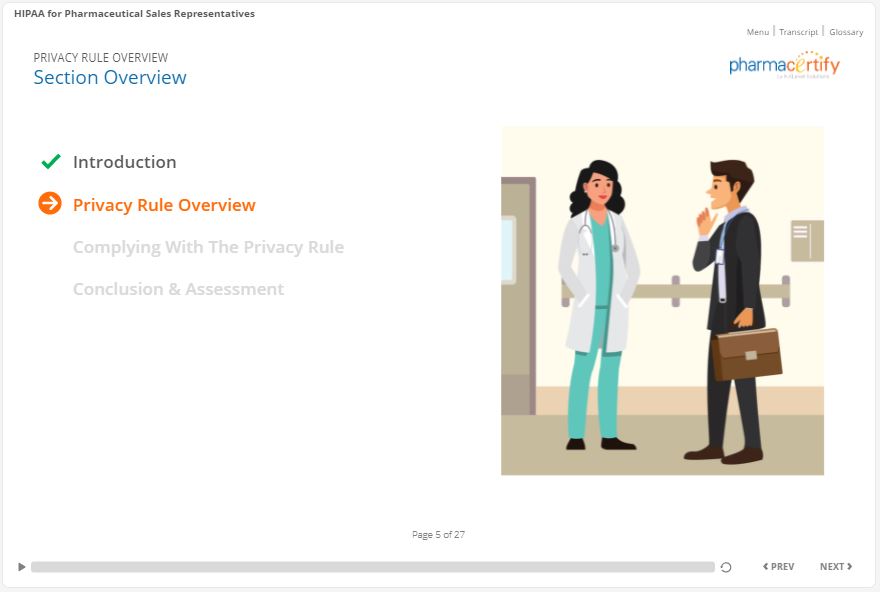
The Compliance Foundations Suite of eLearning modules includes HIPAA for Pharmaceutical Employees .

This isn’t to say effective eLearning always has to be custom developed. Industry-focused, creative, engaging, and modern off-the-shelf training is a great solution for establishing an effective base. So, if you’re with an emerging pharmaceutical or medical device company with limited time and resources, off-the-shelf training is a viable option. Just do your homework and talk to your peers to make sure it’s the right off-the-she solution. (Shameless pitch – we can help!) Of course, custom development does present an opportunity to take your curriculum to another level with more options for branded training laser-focused on your policies if the budget is available.

Also, don’t fall into the current trap of thinking all training has to be short to be effective. Yes, you want to keep foundational eLearning modules no longer than 30 minutes or so, but if 30 minutes are necessary to cover a comprehensive overview of the topic, the learners can sit through it. After all, if we can binge-watch our favorite streaming series, we certainly have the attention span to complete a 30-minute module, assuming it is relevant and engaging.

Reinforcement Drives Retention

Integrate microlearning modules to cover more targeted topics like the 2022 updates to the PhRMA Code.

The second element of the formula for more effective training is reinforcement. When strategically deployed following the initial workshop or eLearning, reinforcement solutions in the form of microlearning modules serve to boost learning, reinforce key topics, and help flatten that nasty Forgetting Curve. For example, if gifts and meals are a high risk for your HCP-facing employees, a scenario-based mini module built around a common situation they face in the field, deployed soon after the foundational training on interactions with HCPs, is an ideal way to increase retention of critical information.

Microlearning modules aren’t the only effective tools for making training more effective, though. Reinforcement learning nuggets could include quizzes and games deployed repeatedly over time. Look for games that can be completed individually or in a multi-player virtual workshop. The Compliance JEOPARDY! game from PharmaCertify, for example, is available in both formats and is easily customized with your content. By the way, it’s the only officially licensed JEOPARDY! game on market and it’s an instantly recognizable way to pull learners into an important reinforcement activity. They’ll even thank you for it.  

The Virtual Compliance Reality Escape Room features a series of customized scenarios and challenges.

Other reinforcement approaches could include virtual or live workshops with content built around the situations sales representatives are likely to face in the field. Why not create a a virtual escape room, for example, with challenges customized for the situations your learners can expect to face in the their daily interactions? (Let me know if you’d like to see a demo of the escape room we built for a client, which recently won a gold Brandon Hall Award for Best Compliance Training!)

The effective integration of compliant practices and policies requires the continuous deployment of a variety of reinforcement solutions. Government agencies like the DOJ and the OIG have made it clear in their guidance, and recent industry settlements and corporate integrity agreements highlight the need as well.

Supporting Their Performance

We’ve come to the ”PS” in the equation that holds the key to achieving integration in a life sciences compliance equation: performance support. Performance support includes those just-in-time resources that people need when they are in-the-moment and can’t remember compliance guidance.

Digital support tools like electronic banners support compliance training messages and themes. When splashed across the company intranet and incorporated into digital messaging from the compliance department and the C-Suite, they remind everyone of the key messages from the foundational and reinforcement training.

Video launched on the company intranet is an effective way to support key messages.

Don’t shy away from the use of video either. Despite what some high-end production companies will tell you, you don’t need to use your entire training budget on a high-end video. You’re not creating Compliance: The Live Action Musical. You’re looking for ways to support your efforts with a creative and engaging video. Tools like Vyond are affordable and easy-to-learn way to accomplish those goals. Many of our clients are developing short (1-3 minute) videos that are pushed out via hyperlink and housed in a library on the compliance page of their intranet. Some even use platforms like Microsoft Stream as an internal YouTube, so that people can rate and comment on the videos.

Finally, materials like quick reference guides support positive behavior and deliver critical reminders when people need them most…as they are about to engage in activities rife with the potential for compliance violation. And other print material like posters and comic books are a great and thematically fun way to drip the learning throughout the duration of a compliance training campaign.

Summary

The key to success and “effectiveness” in compliance training, foundational + reinforcement + performance  support = integration, will not be remembered among the great formulas in history (rest easy Albert Einstein), but any compliance professional would be wise to heed its power. At PharmaCertify, we’ve spent the last 15 years developing compliance training for the life sciences industry. We have the in-house compliance expertise, along with the instructional design and production skill, to help you implement this formula as a necessary step toward meeting the expectations of the regulators, your peers, and perhaps most importantly, your learners.

That’s why we are planning webinars, video-based chats, infographics, more blog posts, and other resources to showcase examples of how our clients are utilizing each stage of the formula to increase the effectiveness of their training. Subscribe to this blog and follow us on LinkedIn and Twitter to keep abreast of the details to follow as we continue to provide the information you need to help reduce risk through training. After all, it’s our mission.

Thanks for reading!  

Sean Murphy
PharmaCertify by NXLevel Solutions

Training Takeaways from the 2021 Pharmaceutical and Medical Device Ethics & Compliance Congress, and What It All Means for Your 2022 Curriculum!

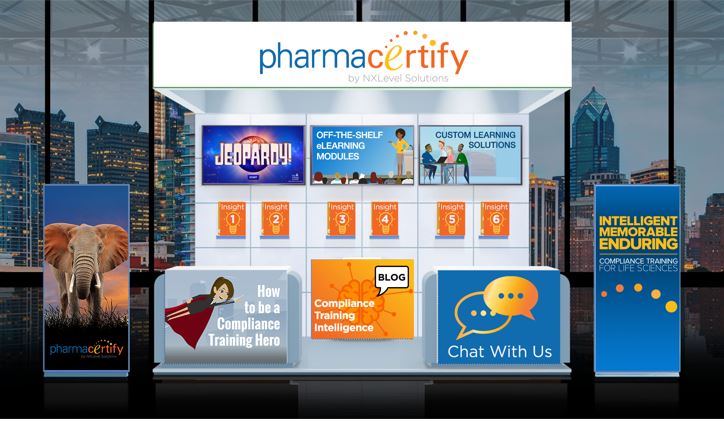
The virtual PharmaCertify booth at the Compliance Congress featured compliance training modules and games for workshops and online use!

The Pharmaceutical Compliance Forum (PCF) understandably went virtual again for the Virtual 22nd Annual Pharmaceutical and Medical Device Ethics and Compliance Congress. Though the lack of booth traffic that inevitably accompanies virtual conferences left the PharmaCertify team longing for the return to in-person events, this year’s presentations featured a bevy of new and compelling content from industry professionals and government regulators alike.

Here are ten takeaways to keep top of mind as you continue to plan, revise, and refine your training curriculum for the first quarter of 2022 and beyond.

The focus on speaker programs isn’t going away.

If the 2020 release of the OIG’s Special Fraud Alert related to speaker programs was a figurative shot across the bow of the life sciences industry, the updated PhRMA Code, scheduled to take effect January 2022, offers steadying guidance on the details of how to conduct more compliant programs. In the OIG Update session and across multiple mini summits involving industry leaders, the mandate was clear: speaker programs are rife with the potential for fraudulent activity and assessing program practices and the level at which you train on those practices is crucial.

Hold the third parties you use for managing speaker programs to the same standards as your internal organization.

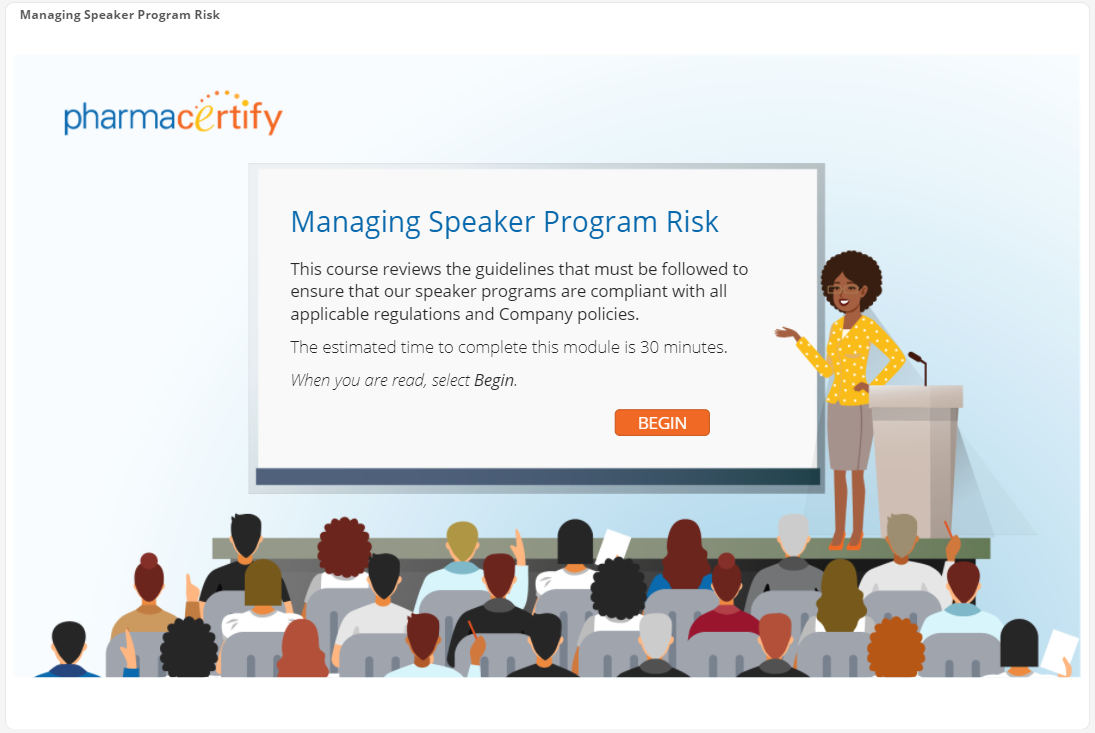
The revised Compliance Foundations eLearning module, Managing Speaker Program Risk, is now available!

Third parties have long been a staple of emphasis at industry compliance conferences, but the increased emphasis on speaker programs highlighted in recent CIAs, the OIG’s Special Fraud Alert, and the revised PhRMA Code speaks to the need for increased scrutiny. And presenters at the conference picked up on that theme. As one presenter noted, “You need to be clear up front, when you are negotiating with third parties you expect full transparency.” And training needs to be part of that consideration from the start of the conversations. Have the vendors you’re considering instituted their own training on speaker programs? Do they need to be added to your list of learners? If yes, do they have access to your enterprise LMS or will they need to access the courses through a separate portal?  

Look to the new PhRMA Code for guidance.

During the mini summit focused on the OIG Alert, PhRMA Code, and AdvaMed Code, Julie Wagner, from PhRMA, detailed the process the organization went through to plan and revamp its Code. It was clearly a thoughtful and well-planned series of steps. Other presenters throughout the conference (on the industry side as well as government representatives) emphasized the need for companies to look to the Code as a framework for how to conduct HCP interactions. The updates to the Code reflect the key takeaways from recent corporate integrity agreements as well as the challenges of conducting business in a post-pandemic world. Whether your company is a signatory or not, training on the new PhRMA Code is more critical than ever. That’s why we have rebuilt our Compliance Foundations eLearning module, The PhRMA Code, with a more intuitive interface and design, and an instructionally redesigned approach to the content. Contact us at info@pharmacertify.com to see a content outline.       

Assess risk across your organization, and don’t forget your training curriculum.

I may be a bit biased since the moderator is my colleague, Dan O’Connor, but the mini summit titled, Optimize Your Compliance Training: A Practical Approach to the DOJ’s Guidance, was one of the most important of the entire conference. Dan discussed the need to assess risk according to audience, topic, format, and cadence with his panelists, Katrina Church of Bioventus, Matthew Hill of Novo Nordisk, and Karen Snyder of Ironwood Pharmaceuticals. If you’re not mapping your activities frequency against the risk associated with each of those activities, the learning will suffer, and risk will rise. All risk is not created equal, and as one presenter in the DOJ/SEC panel said, “It’s difficult to implement an effective program if you don’t know where your risks are.”  

You really do want employees to speak up. So, tell them.

Self-remediation was a theme during the DOJ Keynote as panelists emphasized the importance of companies bringing issues found during their own due diligence to the attention of the agency. Doing so appears to go a long way in how the agency treats cases, especially when the companies demonstrate they are taking the necessary measures to identify the root causes of the issue and remediate them. Does your training encourage employees to speak up when they witness potential violations? Is that message pushed out in periodic scenarios as part of your on-going microlearning efforts? The compliance department can’t be everywhere at all times, so reports of violations are more likely to come from the field. Make sure your learners are well-versed in your reporting and non-retaliation policies.

Be ready for surprises when the industry shifts back to field-based interactions.  

During the Chief Compliance Officer Fireside Chat, one CCO touched on the need to expect surprises as the industry returns to more field-based interactions by saying, “When we get back out into the field, I’m sure there will be things we weren’t expecting.” Is your curriculum built to respond to those surprises? Have you integrated the type of learning nuggets that can be quickly modified and re-deployed as the bumps in the compliance road appear? Including such easy-to-modify components such as mini-modules, alerts, and read and signs into your curriculum creates the agility to respond rapidly before those surprises cause even more uproar.

Patient programs and third-party vendors: a risky combination.

Since the OIG requires manufacturers to take steps to exclude federally insured patients from patient assistance programs, presenters in the mini summit dedicated to patient assistance programs spent a considerable amount of time discussing the need for thorough assessments of the vendors who manage the programs. As one presenter commented, “part of that is looking at the capabilities of the vendor, what processes they have, do they have rules that align with your company’s policies and expectations, and do they have qualified and trained personnel to run these programs.” And as was highlighted, multiple vendors may be involved in different aspects of the programs. The internal and external training matrix can be complex for patient programs but identifying the appropriate level of training across all vendor personnel is the first step to ensuring continuing compliance.

Measure your company’s culture and look for opportunities to strengthen it.

One of the medical device summits featured a lively discussion of company culture as a driver for employee engagement. The conversation focused on the idea that culture is the driving force behind an organization’s approach to its business and everyone in that organization is responsible for maintaining that culture. As one presenter noted, “Culture eats strategy for lunch.” It was a refreshing twist on the rules-based vs. values-based debate and at PharmaCertify, we absolutely agree that life sciences companies need to seek out opportunities to strengthen their ethical cultures – including through training. After all its in our mission statement: helping life sciences companies strengthen their compliance cultures and reduce risk through training.

When it comes to compliance, patients are the new HCPs.

Comments from panelists in the mini summit focused on patient advocacy organizations, their growing reach, and the attention they therefore require from a compliance standpoint. Even the smaller, niche organizations have a big voice with governmental agencies, so they shouldn’t be ignored. Is your compliance program, including your training curriculum, addressing patient advocacy to the appropriate level? The risk is real and as one presenter stressed, “they are the new HCPs.”

Social influencers need to be considered.

The AUSA Roundtable session concluded with a notable discussion on the influx of social influencers and the expectation for more enforcement related to these celebrities who sometimes hold sway over the purchasing habits of the American public. A recent situation involving celebrity, Kourtney Kardashian, was cited as an example of one influencer making public comments, which led to a warning letter being issued to the company by the FDA. Kardashian made a public appearance on a popular television show, as a recognized and paid spokesperson for the product, and made false or misleading efficacy and risk claims. As trivial as the topic of social influencers may seem, they need to be properly trained and prepared to appropriately speak about products.    

Summary

I have only scratched the surface of the plethora of content presented during the during the Virtual 22nd Annual Pharmaceutical and Medical Device Ethics and Compliance Congress. As with past conferences, the depth and expansiveness of topics covered was impressive and well-suited for newcomers to the life sciences compliance industry as well as experienced veterans. There was something for everyone.

PCF, the organizers, and all the presenters deserve a hearty congratulations and kudos for such a wide-ranging and informative conference. There remains no better resource for up-to-date best practices and advice than conferences like this one. Hopefully, the pandemic will be in our proverbial rear-view mirror this time next year and we’ll meet in person for the 23rd Annual Pharmaceutical and Medical Device Ethics and Compliance Congress and never have to deal with that “virtual” word in the title again.

Thanks for reading!

Sean Murphy
PharmaCertify By NXLevel Solutions

Key Training Takeaways from the 2021 Virtual Compliance Congress for Specialty Products

Although Informa’s virtual 2021 Compliance Congress for Specialty Products was targeted to those companies that focus on rare and orphan diseases, many of the key messages shared by the panel of industry professionals and regulators were applicable to compliance professionals from companies of all shapes and sizes.

Here are some of the key takeaways from the three-day conference, with my thoughts on what those messages mean for your compliance training program:

To say the pandemic has changed the way life sciences conducts business may be cliché, but based on the presentations in this conference as well as the Pharmaceutical Compliance Congress in April, at least some of those changes are here to stay. Change begats an increased volume of risk, and in the opening session, Keeping Up with Industry Trends — Top Compliance Concerns Facing CCOs, presenters emphasized the need for risk assessments now more than ever.

1. The current pace of change highlights the importance of risk assessment.

You need to take the same approach with your training curriculum. What are the key risk areas based on your company’s products? How often are the topics relevant to your product covered in live and online training? Are key areas addressed with reinforcement and just-in-time training? We call this process the Compliance Curriculum Analysis Process (CCAP). In fact, I wrote about how the process can improve outcomes for the publication, Life Science Compliance Update, back in 2017. Thanks to the pandemic, and increased governmental scrutiny, it’s even more relevant today.  

2. Choose the right company when making a career move.

While most presentations in compliance conferences are focused on the best practices and concepts necessary to optimize a program, hearing one of the presenters stress the need to be aware of culture before joining a company was refreshing and enlightening. As the presenter pointed out, you cannot be shy about exploring whether the company makes compliance meaningful and if compliance is valued – before you accept a job offer.

Don’t forget to explore their approach to training as well. Are they regularly rolling out the kind of creative training and microlearning that helps flatten the “forgetting curve” my colleague Dan O’Connor, Erica Powers of Sage Therapeutics, and Karen Snyder of Ironwood Pharmaceuticals addressed in the Optimize Your Compliance Training: A Practical Approach to the DOJ’s Guidance session? (By the way, you really should see the slides from that presentation and the examples of fun an innovative training your peers are using to help reduce risk. Drop me an email at smurphy@nxlevelsolutions.com if you’re interested.)

3. Equip leaders with consistent and proper messaging.

In a twist on the familiar “tone-from-top” mantra, another presenter in the opening CCO session stressed the need for the compliance department to take the lead in providing leadership with the proper messaging needed to reinforce that tone. As he said, “consistency is key as you cascade communication across your program.” It applies to training as well. Not only does the C-Suite need to be trained in the same concepts and policies as employees, they, and the management team, need to be repeatedly reminded of the need for a seamless message. As we’ve been told in just about every conference over the last five years, you need to earn a “seat at the table” with leadership. Once you’re in that proverbial seat, helping them espouse the messaging necessary to keep your program consistent is the key to keeping it meaningful.

4. Don’t decline meetings during the pandemic.

During the Compliance During a Pandemic session, presenters spoke at length about the importance of open lines of communication and the need to make every attempt to meet with business colleagues whenever possible. The businesses and field employees need to know you are accessible when they have questions. As another presenter chimed in, “you need to constantly make sure they know who to go to.”  That concept extends to your training curriculum. Does your training include surveys and other feedback mechanisms? Do you encourage outreach in your eLearning? Creating and nurturing an open dialogue can only make your training more effective, during the pandemic and beyond.

5. If you’re going to have live speaker programs, you need to be wary of red flags.

That’s according to one presenter during the prosecutors’ presentation on high-priority risk areas. As he put it, the very fact that HHS even issued the Special Fraud Alert on Speaker Programs should be interpreted as a warning. While multiple presenters in other sessions suggested their companies will move to hybrid models with virtual and live programs, the opinions of the prosecutors were clear: expect the OIG’s focus to be on the live versions.

Managing Speaker Program Risk is one of the newly updated Compliance Foundations eLearning modules available from PharmaCertify. It covers the critical content your reps need to understand to remain in compliance, and like all our modules, it’s easily customized with your policies and content! Contact me to see a demo.

6. Not every patient advocacy organization is the size of the American Diabetes Association.

Day 2 kicked off with the Optimize and Mitigate Risk within Patient Interactions and Support Programs. Presenters noted the trickiness in dealing with advocacy groups in particular – not all the groups will be large and experienced enough to understand the potential pitfalls of compliance. You may need to educate them on the guidelines and principles, and that can be a challenge, especially on the delivery front since outside learners often don’t have access to your internal learning management system.

PharmaCertify can help with the Access LMS platform. Access LMS is a cloud-based, affordable alternative for reaching outside vendors and organizations with your compliance training. It’s simple, it’s easy-to-use, and it won’t break your budget. Contact my colleague, Dan O’Connor, at doconnor@nxlevelsolutions.com to see a demo. 

7. Dig deep into the weeds with MSL/commercial training.

The relationship between the medical and commercial divisions is nuanced and fraught with risk. During the Compliant Frameworks for Medical Affairs and Commercial Interactions session, a presenter whose company recently launched its first product reinforced the need for detail. While medical/commercial interactions have always been a pain point for her, she clarifies gray areas on topics such as “the rules for visiting HCPs together,” with what she calls “ways of working documents that clarify what each group can do and why.

At PharmaCertify, we take the same approach with our MSLs and Sales Reps: Understanding the Divide Compliance Foundations module. The content is designed to cover each role in a manner that helps reps and MSLs understand their own rules as well as those of the other group. I’d be happy to send you a content outline.

8. Follow the money. The prosecutors are.

It’s no secret that the government is scouring Open Payments data. And they are following the trail of money flowing to HCPs. During the enforcement panel, one prosecutor bluntly stated, “if you pay a provider hundreds of thousands of dollars, we are going to be looking at it.”

Reps need to consistently be reminded of HCP spend limits and incorporating microlearning components like on-going assessments and quizzes into your curriculum is key to ensuring those numbers are top of mind. We’d welcome the opportunity to show you how it works.    

Summary

Kudos to Informa and all presenters for putting forth a valuable and important learning experience despite the challenges that always accompany a virtual event. The pandemic has changed the way in which we share ideas, best practices, and personal experiences as much as it has changed the industry in general. As the world inches back to a more “normal” approach to information sharing, I anxiously await the day when we can again meet in person in a conference exhibit hall and exchange ideas for how you can reduce risk and build a stronger ethical culture through training.

Thanks for reading!

Sean Murphy
PharmaCertify by NXLevel Solutions