PCF 2024 Preview

Washington DC skyline at night

In case you haven’t noticed, this year’s Pharmaceutical and Medical Device Ethics and Compliance Congress is right around the corner (October 28-30, in Washington, DC)! And for 25 years now, the congress has always presented the same challenge: so many great sessions and so little time.

The plenary sessions are easy since we’re all gathered together in the same room. Once again, we’ll be listening hard to updates from OIG and FDA representatives, and taking detailed notes during the other plenary discussions, too. We’re particularly looking forward to “The Implications of AI for Lifesciences Ethics and Compliance Programs” on Day 1.

But deciding which mini summits to attend during the rest of the congress is a bit trickier. While they all will provide valuable insights, we’ve narrowed down our list to a manageable, “Magnificent 7” that we will be sure not to miss (queue theme music).

Day 1

8:00-8:50 Mini Summit 1: Federal Criminal and Civil Enforcement: Recent Highlights and Emerging Issues –  A former US Attorney and former DOJ Deputy Assistant Attorney General will discuss recent DOJ actions impacting the pharma and med device industries, along with emerging issues.

9:00-9:50 Mini Summit 8: Update on Medical Device Regulatory and Enforcement Actions – A great follow-on from the previous session, this panel discussion takes aim squarely at the medical device industry and its evolving landscape of regulations and recent enforcement actions.

10:00-10:50 Mini Summit 13: Hot Topics and Compliance Oversight in the Research and Development Area – This session looks to shed more light on an area that may not always receive the compliance attention that it deserves.

11:00-11:50 Mini Summit 18: Compliance Training on the Digital Frontier – OK. Guilty. It’s a session moderated by NXLevel Compliance Sr. VP Dan O’Connor.  But it’s also a place to hear from your colleagues and how they’ve delivered effective compliance training to “digital natives” and “digital immigrants” alike, using approaches and tools that are readily available in your company.

Day 2

9:00-9:50 Mini Summit 35: Privacy Top-Ten: Strategies and Tactics to Address Operational Impacts of the Evolving Privacy Landscape – Yet another session looking to address a crucial compliance topic in motion (this time, privacy).

10:00-10:50 Mini Summit 44: Evolving Risks in Medical Affairs – As many companies ask more of their Medical Affairs teams, the risks that those teams are exposed to have grown. This session will discuss how you can stay ahead of those risks.

11:00-11:50 Mini Summit 51: Negotiating DOJ expectations and business challenges while creating a “Culture of Compliance” – The title says it all. In fact, it may be a good job description for a compliance officer.

That’s our Magnificent 7, but you couldn’t go wrong attending any session at this congress.

And if you go, feel free to visit our shiny new booth in the Exhibit Hall. We will have examples of our latest compliance training solutions to share and are eager to catch up with old friends and make new ones.

See you in DC!

Key Takeaways from PCC 2024

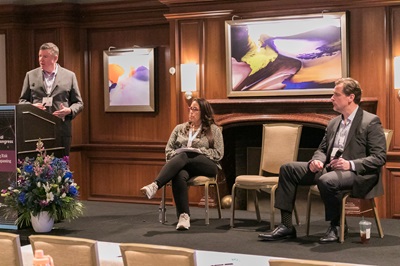
Dan O’Connor, NXLevel Compliance SVP, leading a panel discussion on “Compliance Training on the Digital Frontier”

The NXLevel Compliance team is back from this year’s Pharmaceutical Compliance Congress, where, as predicted, AI was a popular topic and discussions with industry experts reminded us why Compliance should continue having a seat at the table. Here are some reminders and key takeaways from PCC 2024!

AI has landed. While no two companies are embracing and implementing AI in the same way, there is no question that AI is transforming work as we know it and compliance teams are rushing to keep up. Just as we’ve seen with other game-changing technologies, companies are progressively opening the door to greater AI use, which means their policies and training must evolve at the same pace. With AI’s wide-ranging impact, it’s important not to rely on a single training event and instead employ multiple learning channels (such as eLearning, microlearning, videos, job aids, etc.) to instill and reinforce a culture of responsible and compliant AI use.

Compliance applies to everyone. Whether you are a large-scale global company marketing approved products or a smaller scale company with products pending approval, compliance should be at the forefront of your organization. And you need to ensure that your compliance training program meets the needs of your whole organization. While commercial field teams certainly engage in high-risk activities, don’t neglect other members of the organization who may not be as aware of the compliance risks they face.

Social media is still a trending topic. Like AI, the use of social media is constantly evolving. Is your policy up to date? Have you trained your employees on this policy? Your employees need to know the proper ways they may engage with your company’s social media content and the guidelines they must follow regarding their personal use of social media. What can they like, share, or comment on? As we commented on in an earlier post, social media training needs to be rich with examples and help employees understand how their social media behavior can add to their company’s compliance risk.

Keep your training on target. As you may know, the OIG’s General Compliance Program Guidance explicitly states that compliance officers should develop annual training plans that include the training topics to be delivered and the target audience for each topic. While certain training must be delivered company-wide, your training does not always have to be “one size fits all.” When possible, tailor your training to the individual receiving it. And remember, employees are looking for shorter, impactful, and relevant training.

Stay aligned with new and emerging enforcement trends and risk areas. Is your training keeping up with the current compliance landscape? Here are some topics we consistently heard about at PCC:

  • Off-label promotion: Pay attention to social media and other digital content that may not undergo a formal review and approval process.
  • Clinical trial transparency and oversight: Ensure your clinical trial communications contain substantiated claims and truthful, accurate data.
  • Kickback and inducements: Be aware of the implications regarding charitable copays and charitable activities involving patient access programs (PAPs).
  • Data privacy and cybersecurity: Keep patient health data and sensitive information protected.
  • Market access and patient support programs: Monitor your programs to ensure they are operating as intended.

2025 will be here before you know it. Those are just some insights we gathered from this years’ PCC, and we are already looking forward to next year’s event. If you missed us in the exhibit hall and are interested in learning how we can help you reduce your compliance risk, contact us at compliance@nxlevelsolutions.com.

Thanks for reading! See you at the next conference!

PCC 2024 Preview

We always look forward to the Pharmaceutical Compliance Congress, but never more so than this year with AI becoming such a transformative force in the life sciences industry and beyond. This year’s congress, occurring April 16-18, is being held at a pivotal moment for compliance professionals. And once again, there are hard choices to make, as there are more intriguing sessions than one person can possibly attend. To help you decide which ones to drop in on, here are five sessions that stood out to us when reviewing the agenda.

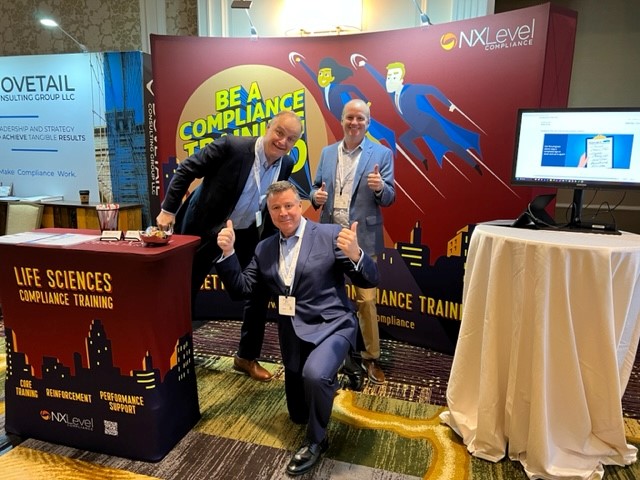
The NXLevel Compliance booth at PCC
The NXLevel Compliance PCC booth.

Day 1: Top Areas of Concern for the Compliance Professional – There are few details for this particular session available right now, but based on the title, the senior compliance professionals on the panel, and it’s prime slot position on Day One, we are eager to find our seats.

Day 1: Enforcement Panel – Critical, Industry-Specific Updates from the Most Active Office’s for the Bio/Pharma and MedTech Industry – This is a unique opportunity to hear about enforcement trends and new risk areas straight from DOJ officials. (And you may want to follow up with the afternoon session on New and Emerging Risk Areas for 2024 and Beyond.)

Day 2: Industry Pioneer Panel – A Look at the Rapid Adoption of AI Across the Life Sciences Sector – This session promises to provide insights on how compliance professionals can help their organizations responsibly adopt AI and mitigate the risks involved. (Once again, there is a complimentary afternoon session on Artificial Intelligence in Life Sciences Compliance.)

Day 3: Industry Case Study: Compliance Training Strategy and Implementation –This is a can’t-miss session for compliance training professionals. Three members of Regeneron’s compliance team will share their experience implementing and executing an effective training strategy. Expect plenty of practical insights.

Day 3: FDA Address –  The conference ends on a high note with a session with Catherine Gray, PharmD, Acting Director, Office of Prescription Drug Promotion, U.S. Food and Drug Administration (FDA). Hear the OPDP’s top priorities from the Director herself, as well as her thoughts on enforcement trends and warning letters.

Special Mention

Day 1: Compliance Training on the Digital Frontier—Okay, we’re biased. NXLevel Compliance Senior VP Dan O’Connor and his panel have put together a session that explores how you can use existing tools and emerging technologies to create a compliance training program that reduces risk while meeting the expectations of all of your employees, no matter where they are on the “digital fluency” spectrum.

These are just some of the exciting programs planned for PCC, and we look forward to seeing many of you there. If we don’t run into you at a session, please stop by and visit us at the NXLevel Compliance booth, where we will be sharing examples of the different kinds of compliance training solutions we can create to help you meet this unique moment in the life sciences industry.

See you in Virginia!

Compliance Training Trends 2023

“What are other people doing?” It’s a question we’ve been asked by almost every client. They know that we work with dozens of life sciences companies each year, many of which have the same compliance risks and face similar training challenges.

And while no two clients, or the solutions we create for them, are exactly alike, we noticed eight common trends this year. So, here’s what “other people” were doing in 2023.

Delivering shorter and sharper training. Across the board, clients turned towards shorter, leaner training solutions. Whether that meant trimming down longer modules or creating a series of shorter modules, clients embraced solutions that minimized learner fatigue and established more realistic learning goals. An important principle to remember is to suit the length of the training to the content. For example, if the complexity of a topic truly requires a 20-minute module, then don’t break the module into two parts just to have shorter modules. Your learners might find this more annoying than simply having a single, longer module to complete. A more meaningful way clients reduced training length was by …

Targeting training by role. Coupled with the goal of shorter training, we were able to create better compliance training solutions for clients because those solutions were targeted to specific roles and/or risk areas. In some cases, this meant designing a series of micro-modules that focused on specific types of interactions with healthcare professionals. For other clients, we included role selectors inside modules, so learners received instruction tailored to their job. This went a long way to …

Making it more engaging. Life sciences employees must navigate a deluge of information and many of them spend a significant amount of time working outside of the office, where distractions increase. Getting and keeping their attention is an ongoing challenge. In 2023, our clients continued to embrace new visual and instructional designs approaches, while employing games, interactive activities, and video to grab learners’ attention and help them make meaningful connections between their jobs and critical compliance principles. And once learners were engaged in the process of learning, our clients focused on …

Keeping it going. All our clients (and the OIG) recognized the need to sustain learning. That’s why they increasingly followed a foundational training experience with reinforcement and refresher activities over the course of the year, including microlearning modules, videos, intranet banners, and emails. They also spaced out training on new topics, which built a regular rhythm of learning and increased retention. A key to sustaining learning momentum is recognizing that sometimes the best solution is …

Not creating training. Formal training is not always the answer. Sometimes what’s needed is a job aid, a refresher video, or even a simple email reminder. We helped clients use these solutions to augment or replace formal training activities. Ultimately, this helped support the next trend we saw, which was …

Looking at the big picture. Our clients increasingly looked at training from a curriculum perspective, mapping out yearly training plans to address their key risk areas. We were rarely asked to design a learning solution in a vacuum. More often, we were asked to design a full curriculum instead of just one course. Along with enabling the trends mentioned above, this allowed us to step back and consider where each organization was on its journey and chart a compliance training path that supported their employees going forward. Of course, no compliance team can properly grasp the bigger picture without …

Partnering with the business. We were impressed by how many compliance teams collaborated with their business colleagues as true partners. Many training projects had a larger goal of empowering business areas to take more ownership over reducing their compliance risk, instead of just relying on Compliance for all the answers and initiative. Working more closely with the business also reinforced the importance of …

Remembering patients. Clients continually reminded their learners that compliance is ultimately about helping patients, that healthcare laws and regulations exist to help ensure medical decisions are made in the best interest of the patient. To motivate employees to be compliant, training needs to be focused more on patient care than penalties.

These are just some of the trends that stood out in 2023 and have us looking forward to more creative, impactful, and exciting trends in the year to come.

Thanks for reading!

Align Your Training to the OIG’s Latest Guidance

In our last post, we covered the training highlights found in the OIG’s new General Compliance Program Guidance and noted the agency’s suggestion that “education should not be limited to annual formal training requirements.” In this post, we dive into detail about the different solutions you can use to build a curriculum that addresses the OIG’s guidance and effectively battles the “forgetting problem” inherent with a one-and-done approach to compliance training.  

Reinforcement Staples

Micro-Modules
Deploying microlearning modules to reinforce on topics previously covered in foundational training is a great start toward an optimized curriculum. For example, if MSL and commercial interactions are a particular cause for confusion, a short module with fresh content, or even content repurposed from foundational training, keeps critical points fresh in the learner’s mind and helps reduce the risk those interactions present.

Reinforcement Videos
A range of modern software programs allow for the rapid and efficient development of high-quality, animated videos ideal for reinforcing key concepts across your organization. For example, a 90-second reminder on good communication practices can be delivered through a link in an email, or it can be playing on monitors in public spaces located across your company. We’re creating a library of videos for a number of our clients, which they can deploy strategically and provide as references on their intranet.

Creative Workshops
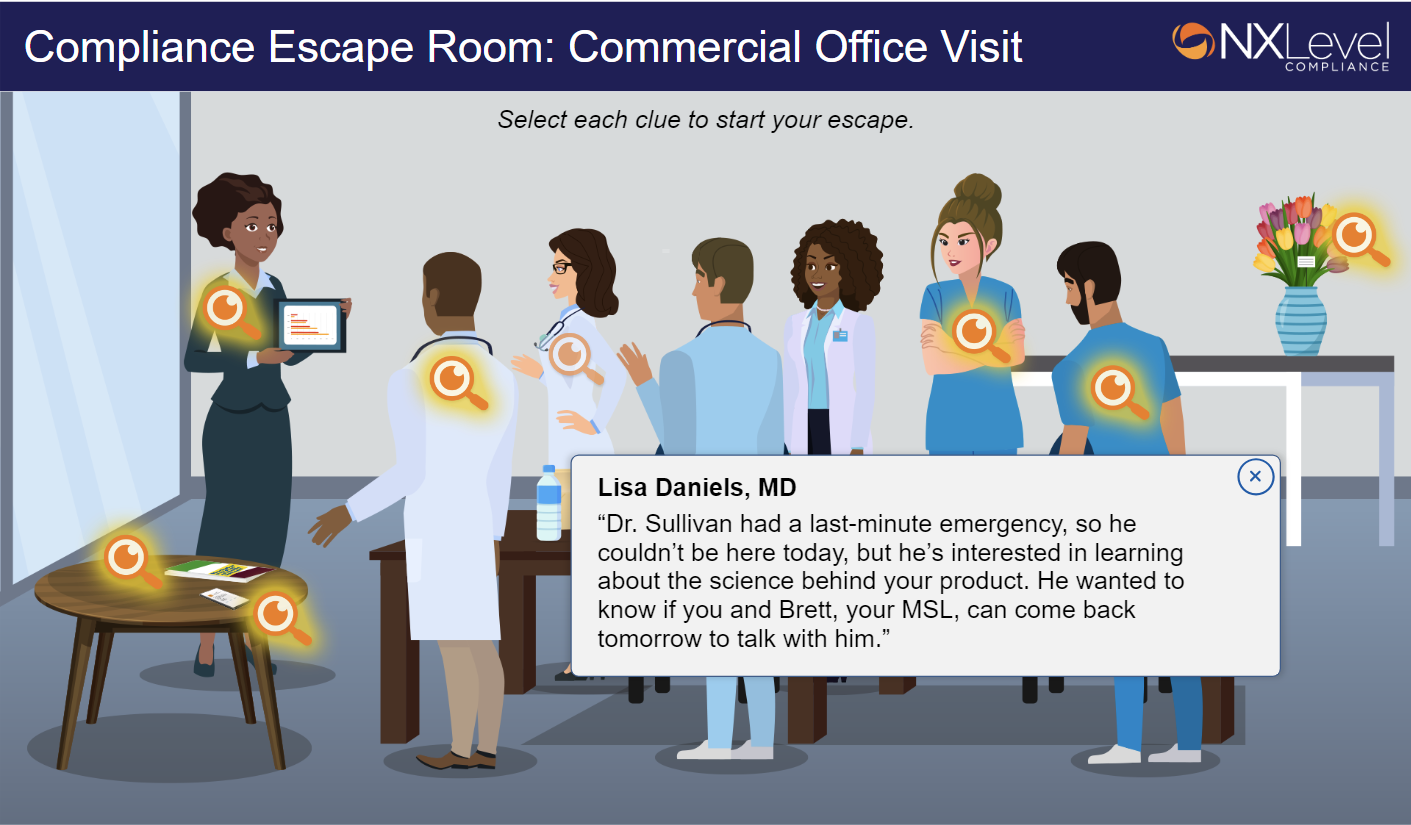
Whether delivered in-person or virtually, a creatively designed workshop brings compliance guidelines to life and lets your learners practice applying their knowledge in a “safe” environment. Two of our favorites are our Compliance Reality Challenge and Compliance Escape Room workshops, where individuals and teams explore real-life scenarios and compete against one another using online, interactive tools.  

Compliance Games
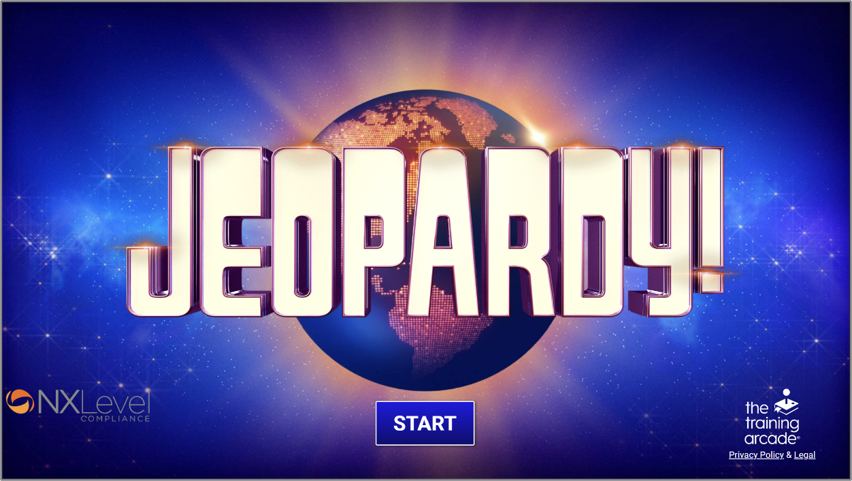
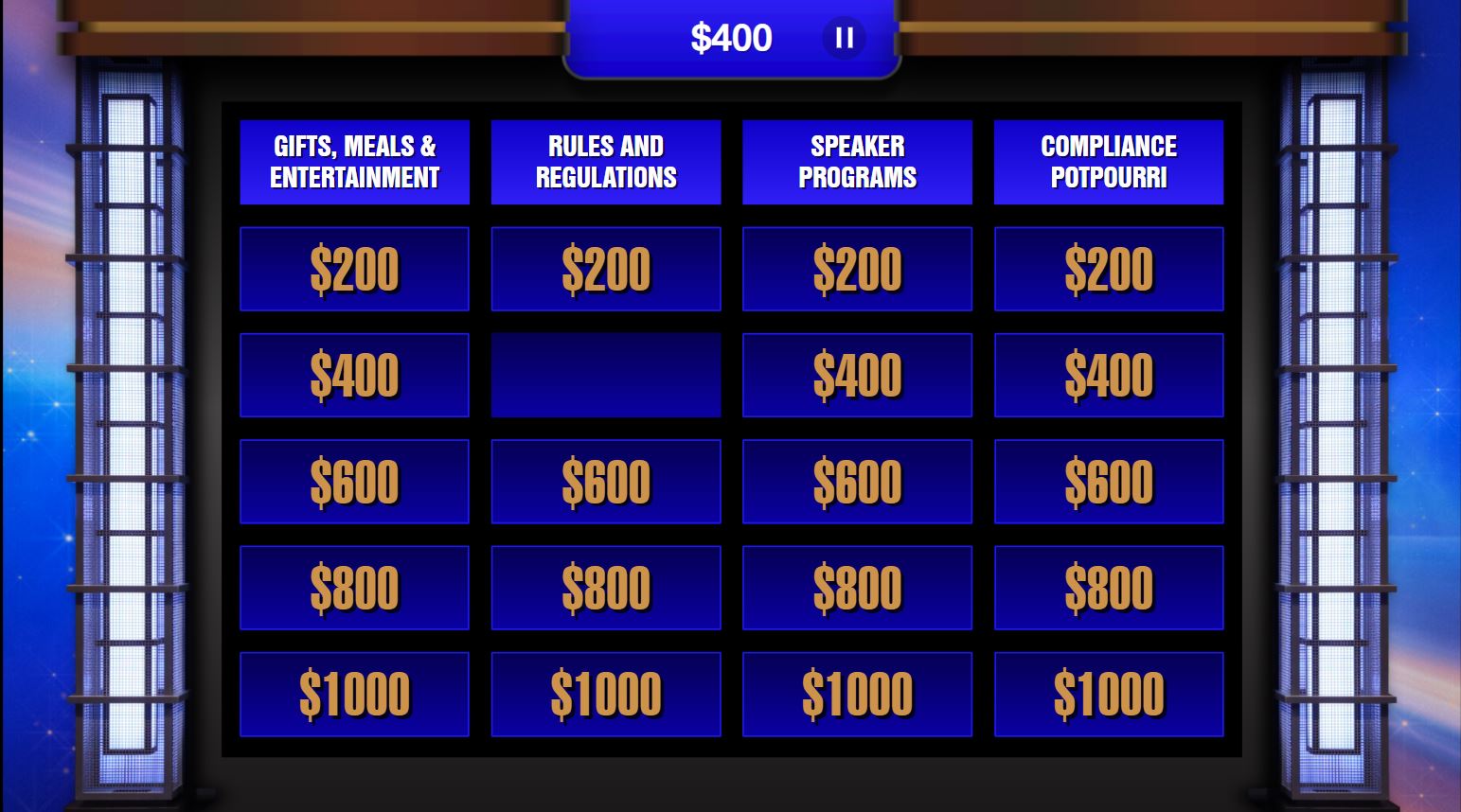
If you want your learners to remember their training, play a game. When deployed in a live/virtual setting, or through an online system, well-designed games are yet another tool to help reinforce critical compliance guardrails. Keep the gameplay fun and, if possible, keep it familiar. Our Compliance JEOPARDY! game, for example, is the only officially licensed JEOPARDY game on the market and features immediately recognizable graphics and music to pull participants into the learning.

Think Outside the Box

Enhanced learning can be supported by a wide range of creative solutions – not just the more common ones mentioned above. And making training stick isn’t always about creating more training. The right communication tools can reinforce key concepts and messages.

Comic Strips
A number of our clients have used comic panels as a fun way to carry messages across different formats and support their unique company and compliance culture. If, for example, you create characters as part of a theme for your code of conduct training, why not recreate illustrated versions of those same characters in print? The comic panels can be displayed on posters or digitally on company platforms, and you can even create graphic novels that can be distributed to employees.

Digital Banners
Banners posted across electronic platforms such as your intranet can help reinforce training messages and remind learners of key events. Have you stressed a “speak up” culture in your core compliance training? Add digital banners across different platforms to boost that message using the same visual design employed in the training. Do you celebrate Compliance & Ethics Week with live events? A digital banner can remind attendees of the dates.

Compliance Avatars and GIFs
A common refrain heard at compliance congresses is the need to boost the perception of compliance as a business partner. Creating avatar versions of key compliance personnel is a fun way to “put a face” on compliance and make compliance seem less intimidating. You can even develop GIFs with messaging using these avatars and push them out through internal messaging platforms like Slack.

Keep it Continuous and Keep it Fluid

A truly effective continuous compliance training curriculum is a journey, not a destination. Successful companies are always looking for ways to enhance their curricula with solutions that creatively extend learning beyond a yearly event, and we have only touched on a few ideas. Keep an eye on our LinkedIn showcase page for examples of the tools we help our clients utilize to reduce their compliance risk.

Thanks for reading!

Training Highlights from the OIG’s New General Compliance Program Guidance

Like many of you, we’ve been reading the new General Compliance Program Guidance the OIG released this week. And of course, we jumped right to the section on training! Before we discuss the OIG’s new training guidance, we should note that this guidance applies to the healthcare industry as a whole, not pharmaceutical manufacturers specifically. However, the OIG has announced its intent to continue to publish separate guidelines for specific industry sectors and we can expect to see new and revised versions of those guidelines in the future.

With that caveat in mind, how does the training guidance in the OIG’s new General Compliance Program Guidance compare to what’s stated in the OIG’s existing Compliance Program Guidance for Pharmaceutical Manufacturers? Essentially, the message is the same, but there are new points of emphasis.

One of the most striking statements in the new guidance is, “Education should not be limited to annual formal training requirements. The compliance officer should seek and develop opportunities to provide education on compliance topics and risks throughout the year.”

This follows a trend many companies have already embraced. More companies are supplementing their formal compliance training events with micro-modules, short videos, brief communications, games, quick reference guides, and other less formal solutions that are deployed over the course of the year. The result is a learning ecosystem designed to reinforce and reenergize key compliance behaviors and messages. The OIG guidance calls out examples such as those mentioned above.

Other new points in the guidance jump out as well. The document:

  • Explicitly states that compliance officers should develop annual training plans that include the training topics to be delivered and the target audience for each topic
  • Provides a list of suggested topics to cover when training employees on your company’s compliance program
  • Emphasizes the need to provide targeted compliance training to board members
  • Stresses that compliance training should be made accessible to all learners (for example, by making it available in different languages)
  • Provides guidance on allowing training waivers for contractors

Obviously, there’s more than just training guidance to be found in the OIG’s new document, and we’ll be combing over it looking for more nuggets to share here and on the NXLevel Compliance LinkedIn page. In the meantime, feel free to reach out to info@nxlevelsolutions.com to learn how we can help you reduce risk and be a compliance hero!

Top Ten Sessions to Attend at the 2023 Pharmaceutical and Medical Device Ethics and Compliance Congress

Don’t forget to visit the crazy NXLevel Compliance team at their booth to talk training and see demos!

This year’s conference is October 25-27 and NXLevel Compliance will be there, as usual. We’re excited to see our clients and colleagues and discuss how we can help reduce risk through better compliance training.

Also, Dan O’Connor, our senior VP, will be moderating a panel of CCOs on the topic of developing compliance leaders at 8:00 AM on Thursday the 26th. Grab your coffee and breakfast and join them for ideas and practical approaches you can use to help develop your team and yourself.

Here are ten other sessions we find to be compelling, especially from a training perspective:

Mini Summit 1: Compliance Primer and How to Make the Most of Your Time at the PCF Congress
Although this session is tilted those new to life sciences compliance, expect it to be valuable for everyone as Terra Buckley shares tips for maximizing your learning and networking time at the conference.

Mini Summit 3: Insights from Medical Device Corporate Integrity Agreements
Corporate integrity agreements are sure to hold keys for the expectations of regulatory bodies such as the OIG and point to the appropriate focus for any medical device compliance training curriculum.

Mini Summit 5: The Latest in Social Media Enforcements
If you’re concerned about what your company’s employees might be posting or sharing (and you should be), you don’t miss this one. Side note: stop by our booth to see a demo of our new Social Media Matters Compliance Foundations module.

11:50 am Networking Luncheon In Exhibit Hall And Luncheon Mini Summits
You don’t want to miss the opportunity to network with the vendors, especially at Booth 212, where we’ll be sharing demos of our newest compliance training solutions, including our Compliance QuickTakes. Then head into Luncheon Mini Summit 23: Is the “No Patient Left Behind” Approach to Patient Support Programs Viable? to hear the tips for safeguarding against the risks inherent with patient programs.

Keynote: OIG Update
This year, Mary E. Riordan, Senior Counsel for the OIG, is joined by Robert K. DeConti, Chief Counsel to the Inspector General, so the annual look back at recent settlements and preview of the agency’s 2024 workplan should be even more enlightening.

US DOJ Keynote
Lisa Miller, Deputy Assistant Attorney General for the Criminal Division of the Department of Justice, is up next and just like the OIG presentation, this is a can’t miss session for anyone interested in knowing where the DOJ’s attention is focused, especially considering the updates to the agency’s Evaluation of Corporate Compliance Programs guidance in March of this year.

Prosecutor’s Roundtable
The prosecutor’s roundtable never disappoints in terms of the tips and suggestions panelists share regarding the government’s focus and what the industry should expect on the enforcement front.

Mini Summit 31: Annual FCPA Update
All is quiet on the FCPA front…or is it? Mark this one in your calendar to hear the latest in enforcement and trends, then plan to modify your 2024 global anti-corruption training accordingly. (We have a training module for that!)

Mini Summit 51: Compliance Experts Address Concerns on Emerging Risk Areas
We’re fast approaching the end of 2023 and the start of a new year of compliance training. New risks are emerging. This session should be a great starting point for your review process as panelists discuss the new topics you’ll want to emphasize in your curriculum.

Mini Summit 52: Compliance Considerations for Rare Disease
Sessions targeted to this growing segment of the industry can offer valuable content related to the training needs of that segment. Expect Tiffany Damiani from Insmed and Michael Hercz of Sentynl to do just that for the rare disease group.

Conference Registration Discount
We’ve only scratched the surface of the fifty-three mini summits and multiple plenary sessions in the agenda. The Pharmaceutical and Medical Device Ethics and Compliance Congress remains one of the few opportunities for you to network with leaders in the field as they share their experiences and best practices building and maintaining an effective compliance program. No matter your industry or your company’s product focus, you’ll want to be there. If you haven’t already registered, contact us at info@nxlevelsolutions.com for our sponsor discount.

Thanks for reading, we hope to see you in Maryland!

A Long and Winding Compliance Training Journey

“Lately it occurs to me, what a long, strange trip it’s been.”
Truckin’, The Grateful Dead

In case you haven’t heard, I’m trading the canal towpath alongside NXLevel’s headquarters for the beach, where I will be contemplating the meaning of life and writing about something besides life sciences compliance. In other words, I’m retiring.

While I will still be “virtually” hanging around NXLevel Compliance on a part-time basis and even contributing to this blog, my journey in the world of life sciences’ compliance training is coming to an end. And it has certainly been a long, interesting trip.

That’s 16 years of custom and off-the-shelf eLearning modules and a plethora of workshops and games all intended to help companies reduce risk and help their employees conduct business in a more compliant manner. Some were produced by us at NXLevel, some by in-house resources at industry companies, and some, based on the quality of the work, by vendors who had no business developing training, let alone expecting clients to pay for it.

So, the time has come to pack my bags and to ruminate on the evolution of compliance training I have witnessed during my professional journey. I leave impressed with the progress (albeit not always with the pace of that progress) and hope for a brighter future of reduced risk through better training.

Where We’ve Been

All those years ago, when I first joined NXLevel Compliance (then known as PharmaCertify), compliance training was somewhat in its infancy. To be more exact, “effective” compliance training was in its infancy. Slots reserved for compliance during POA meetings were often filled with representatives of the compliance department speaking to a PowerPoint deck. And even if the slides were created with some sense of creativity and imagination, little to no thought was given to engagement and instructional design…or heaven forbid, fun! After all, this was compliance, we had to be serious. Fortunately, that notion has faded.

Online eLearning offered opportunities to raise the engagement level and impact of the learning, but off-the-shelf “industry-generic” modules from large vendors were commonplace back then, and nothing will send a life sciences learner into a haze of disinterest more quickly than seeing an ethics scenario featuring characters from an insurance company. When modules were targeted to the industry, they were often developed by vendors whose primary business was focused on consulting, and they lacked the instructional and visual design necessary to improve the retention of policies and key concepts.

Not all training was dark, dreary, and dull back then though. There were leaders on the industry side who recognized early on that training needed to do more than just check-the-box in case the regulators came calling. As a vendor, I had the opportunity to call a number of these individuals my clients, and their steadfast commitment to raising the training bar was refreshing and presented us with a welcomed challenge.

Where We Are Now

Eventually, that commitment started to permeate the industry and the light at the end of the learning tunnel grew brighter. Instructional design concepts like adult learning principles became more than a buzz phrase and companies realized that training needed to be relevant to be effective.  

Today, our clients come to the table knowing that training, whether off-the-shelf or custom, needs to be targeted to a learner’s role and feature up-to-date content designed in a manner that optimizes learning. Even the government is getting on board, with recent guidance highlighting the need for “shorter, relevant” training programs.   

The bar has been raised on design as well. Simply put, it’s easy to see that compliance training looks better across the life sciences landscape. Many of our clients are even asking for more thematic training, with the imagery and verbiage being carried across the entire curriculum and the communications plan. (By the way, you really should contact my colleague, Dan O’Connor, to see examples of the award-winning “pulp magazine” concept we helped one client create and execute. It’s cool stuff they’re using to great success.)  

And fun is no longer a dirty word! In addition to asking us to develop bolder concepts for online training, clients utilize our workshop frameworks like the Compliance Escape Room, and the series of games we offer through the Training Arcade, including the always popular JEOPARDY! game (check out the demo here).

At long last, compliance training industry professionals seem to finally be catching up with the colleagues on the sales training side of the business in terms of creativity, engagement, and instructional design. It was a tall hill to climb, and we are getting there. The future looks bright, now all we need to do is mix a little science into the formula.  

Where We Are Going (Or Should Be Going)

“Science is magic that works.”
Kurt Vonnegut

A few years back, I wrote on this blog about the German scientist, Herman Ebbinghaus, and his well-established “forgetting curve,” which essentially demonstrates that the amount of information humans remember after a learning event drops precipitously after the completion of the of that event. Our colleague, Steven Just, Ed.D., a leader in the field of learning science explains Professor Ebbinghaus’ theory this way, “The secret to long-term learning is to retrieve the memory from long-term memory, bring it into working memory, process it, and then re-encode it into long-term memory.”

So, the future of training isn’t virtual reality, as the faddists would have you believe, it’s in the continuous reinforcement of key concepts and the on-going delivery of training no matter the format. And for the compliance professionals wise enough to understand that reviewing training materials at regular intervals (spaced repetition) leads to better learning, the future is now.

Beware though, micro doesn’t just mean shorter. In addition to mini modules, learning nuggets like quizzes and gaming, deployed over time all heighten retention as well. Spacing the delivery of those components is the key to ensuring the proper guidance and best practices remain top of mind as employees conduct their business. It’s why the team at NXLevel Compliance emphasizes the use of foundational, or core, training, reinforcement solutions (quizzes, games, assessment, etc.) and performance support tools (interactive PDFs, posters, videos, etc.) to continuously “encode” concepts into the learners’ memories. Continuous learning leads to lasting results. It’s not magic, it’s science.

That’s a Wrap!

Over the last 16 years, I have had the pleasure of working with great clients, subject matter experts, and associates. I have learned from all of you. As you continue your compliance journey, I urge you to keep reading this blog and even more so, stay in touch with my colleagues at NXLevel. I know I am biased, but they truly are at the cutting edge of training design, and they bring a sense of professionalism and dedication to every project, no matter how large or small. I have been fortunate to work with them.

Thanks for reading everyone. I will see you down the road!

Sean Murphy
(Formerly) NXLevel Compliance

Using the ADDIE Model to Build Better Compliance Training, Part 6: E is for Evaluation

In the final installment in this series, we look at the E in ADDIE and discuss a less obvious, but effective, way to evaluate the effectiveness of your compliance training.

The last “E” in ADDIE, evaluation, is often the most overlooked. With so many demands on your time, it’s easy to feel that evaluation is a form of looking back, a luxury that you don’t have the time for. The truth is evaluation is all about the future and focusing on how to make your next training program more effective.

Most compliance training includes an assessment at the end that is meant to measure how well the learner achieved the objectives of the training. But as we know, measuring learning objectives immediately after training is completed is not a good indicator of how well the learner will transfer that training to their job. The forgetting curve slope can be fast and steep.

A better way to evaluate the effectiveness of a training program is to assess your learners a few weeks or even a few months after they have completed the training. But most learners view assessments with the same level of joy as a visit to the dentist, and not all assessments provide useful information. So how to assess learning without using an assessment? Play a game!

Recently, NXLevel worked with a client to evaluate the effectiveness of their annual compliance training by using the JEOPARDY! game from our suite of compliance training games.

JEOPARDY! is a proven and popular learning format employees are genuinely excited to play, and our version provides detailed reporting that allows you to drill down to see how employees responded to individual questions. It’s also the only licensed JEOPARDY! game on the market, so it features the same graphics, music, and gameplay as the television version.

Working with the client, we developed a series of role-specific JEOPARDY! games with questions that focused on critical topics pulled from their current compliance training. We configured each game so learners could play it on their own in about 10-15 minutes.

The client identified a representative subset of employees for each role and emailed each of them a link to their game.

No one was required to play, but employees could earn points towards their company’s rewards program for completing the game and more points for being high scorers. Through their company’s rewards program, employees redeem points for merchandise, gift cards, and other items.

The games were a big success! Employees appreciated that they  were short, fun, and engaging. More importantly, the client obtained valuable data on how employees responded to each question, and they are now using that data to help determine how to revise their compliance training. By looking at questions where employees scored well, where employees seemed to struggle, and which incorrect answers were chosen, the client has a clearer picture of their compliance learning needs. Such practices also align well with the DOJ’s increased emphasis on a data-driven approach to compliance.

And with that, we’ve returned to the first step in ADDIE, analysis. We’re ending this blog series on using the ADDIE model where we began, because learning never ends and each step in the ADDIE model informs and interacts with the others.

Thanks for reading. We hope you’ve found the entire series informative and helpful. As always, any and all feedback is welcome!

Using the ADDIE Model to Build Better Compliance Training, Part 5: The “I” Is for Implementation

For this installment of our series on using ADDIE to build better compliance training, I interviewed one of NXLevel’s Senior Project Managers, Pam Dorini, to hear her tips and suggestions for successfully implementing a compliance training program. According to Pam, a successful launch is built around one idea: begin with the end in mind.

Here are the highlights of our conversation.

As a project manager for custom and off-the-shelf compliance training projects, when do you start thinking about implementation?

Absolutely from the start of the project. The instructional designers, writers, and clients need to think about what we want the learners to know and be able to do as a result of the training. Then, we need to proactively think about the factors that are going to contribute to the learners doing that.

There are so many components to a successful launch, and so many stakeholders that need to be involved, implementation has to be a critical part of the plan from the start of the project. And how well that implementation goes is ultimately driven by the earlier steps in ADDIE – analysis, design, and development.

What do you see clients overlooking or underestimating in terms of implementation?

We are all pressed for time, so I think where clients go amiss is that they want to get going, get the training done, meet the immediate needs, and move onto the next project. If you don’t take the time to think through all the issues at the start, you’ll run into problems at implementation because that is where it all comes together. The time it takes to implement the training is usually quite short compared to the other stages, but implementation is where all those other stages come together, and it has to be planned as carefully.

Often, the analysis, design, and development stages are driven by the implementation date and that can lead to issues, especially when that development window is compressed, and clients are rushed to meet the deadline.

What is important for clients to consider regarding their LMS?

They need to think about the obvious and the not-so-obvious technical specifications. I will ask the client lead if he or she has released something on their LMS that is similar to what we are developing, and in most cases, we prefer to deliver a protype module for testing.

Time allocation needs to be top of mind. For example, does the LMS team have enough time to complete testing and remediation?

When we are working with a new LMS or authoring tool, testing conducted in tandem with module development is a good practice that has helped us avoid pitfalls or delays late in the process (i.e., implementation). As a company, we have integrated training into just about every LMS imaginable and there are idiosyncrasies from one to another. In some cases, we even uncover things we couldn’t have anticipated otherwise, like a font that doesn’t display correctly in a client’s system.

Are some timeframes better than others for launching compliance training?

They can be. Keeping the needs of learners at the forefront of decision making is critical. Timeframes need to be considered in correlation to the amount of time learners are given to complete the training and what other training is expected of them during that same period. Many of our clients tend to avoid launching big training initiatives over July and August because that’s when employees are often on vacation. Another challenging time can be late Autumn into the end of year as holidays and company shutdowns approach. We seem to get a lot of requests for launches in the Spring or in September and early October.

Can you share an example of a client who you think does a really good job with the implementation of training and talk about why?

I am thinking of one in particular who takes the time to understand all the various organizational goals. We always spend a lot of time planning with her and her team. She understands the capabilities and limitations of her LMS, and she engages with the business to get input on what they feel their learners need. She also understands the need for consistent communication with internal stakeholders and with us. By the time we get to the implementation point, everyone knows what to expect.

What type of changes have you seen in recent years related to implementation?

While the LMS is still the primary modality for compliance training, our clients are delving into other formats to better provide ongoing learning, reinforcement, and performance support. In addition to modules, we are developing infographics, quick reference guides, digital assets, games, and videos, which are made available in various ways. As an example, I’ve seen several clients build a library of compliance micro videos and set them up on their company SharePoint or intranet platform, then announce and link to them via email.

Conclusion

As Pam emphasized throughout our discussion, the implementation stage of compliance training drives all stages of a project. Always considering who will be taking the training, how they will be taking it, and when they will be taking it is key to making your training more effective. To roll out training that reduces risk across your company, begin with the end in mind, and keep it in mind from project start to finish.

Thanks for reading!

Sean Murphy
NXLevel Compliance